SEO Hosting Blog
-
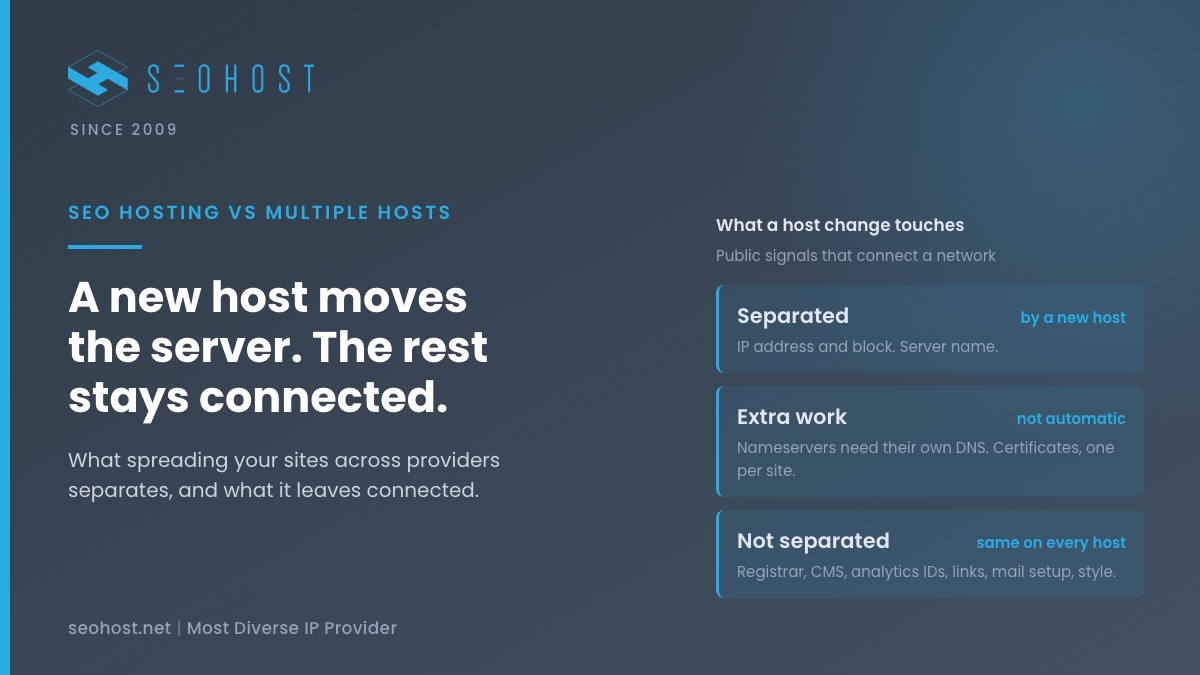
SEO Hosting vs Multiple Hosts: What Spreading Your Sites Really Costs
TL;DRSpreading a network across multiple hosts separates the IP address and the server, and Google has said neither one sets your rankings. Most of the other things that connect your sites, from the registrar record to the analytics ID, move with you to every host. What multiple hosts really adds is admin: a login, a renewal and a PHP schedule per site. For three sites that is a fair trade. Past that, we think one SEO host with separate addresses and nameservers per site is the better one, and the calculator below lets you test that against your own numbers.
-
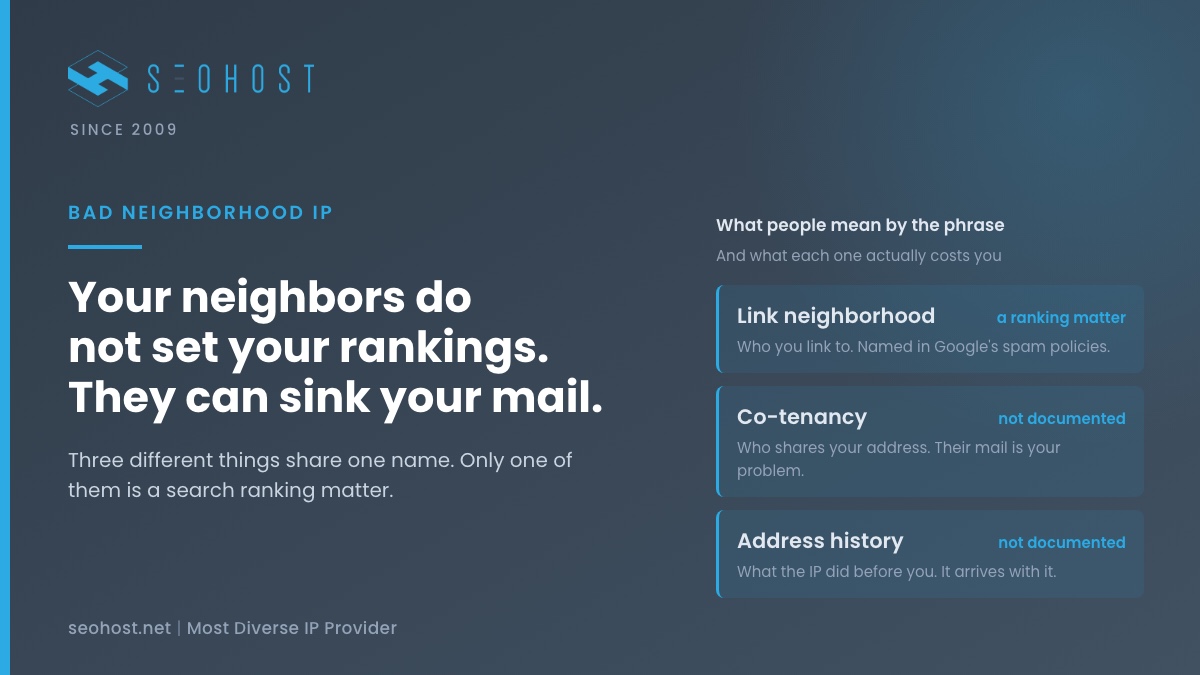
Bad Neighborhood IPs: What Sharing an IP With Spam Sites Actually Costs You
TL;DRA bad neighborhood IP is mostly not a ranking problem: Google’s spam policies describe links and behavior, not addresses. What an address’s history really costs you is rejected mail, challenged traffic and a cleanup you run yourself. We scanned the 512 addresses around our own site against two blocklists to show what a real neighborhood looks like, and how to check yours in five minutes.
Categories
- AI SEO
- Blogging
- International SEO
- Marketing
- News
- Search Engine Optimization
- SEO
- Web Hosting
- Webmaster
Social Links!
-

Why Algorithm Changes Should No Longer Be A Significant Issue For SEO
Everyone who’s spent even a little bit of time studying search engine optimization (SEO) knows about the dreaded algorithm update. We’ve all heard the horror stories. Tales of how Google’s Penguin and Panda updates destroyed traffic numbers for countless websites. In one piece published by UK News agency The Telegraph, the author explains how Google…
-

Avoiding The Biggest Mistake Most Businesses Make With Social Media
The value of social media as a marketing tool has already been well-documented. Everyone knows by now that any brand worth its salt needs to at least have a presence on Facebook. What people aren’t clear on, however, is what exactly that presence entails. The issue, as it were, is that businesses don’t take the…
-

5 Ways To Greatly Improve Your Website’s Performance
Quick question. If you navigate to a website and it takes forever to load, what’s your first instinct? Do you stomach the painstakingly-long wait, or do you go back and try to find an alternative. Chances are good that unless we’re talking about a major social network like Facebook, you’re going with option B. There…