SEO Hosting Blog
-
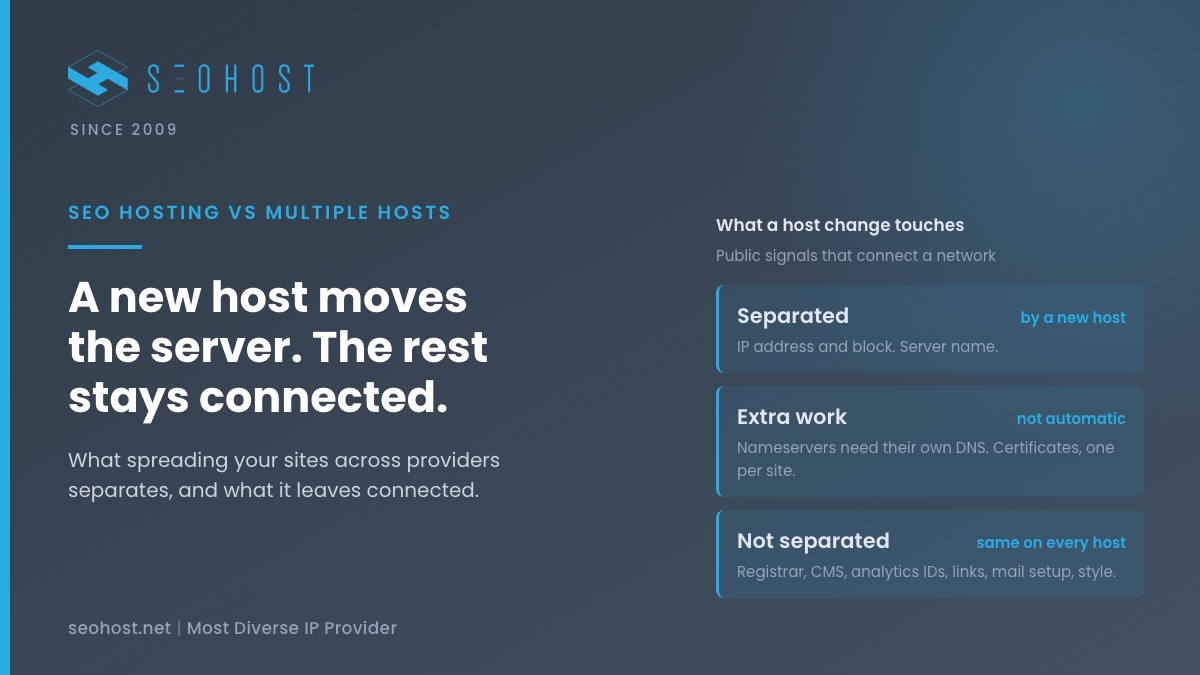
SEO Hosting vs Multiple Hosts: What Spreading Your Sites Really Costs
TL;DRSpreading a network across multiple hosts separates the IP address and the server, and Google has said neither one sets your rankings. Most of the other things that connect your sites, from the registrar record to the analytics ID, move with you to every host. What multiple hosts really adds is admin: a login, a renewal and a PHP schedule per site. For three sites that is a fair trade. Past that, we think one SEO host with separate addresses and nameservers per site is the better one, and the calculator below lets you test that against your own numbers.
-
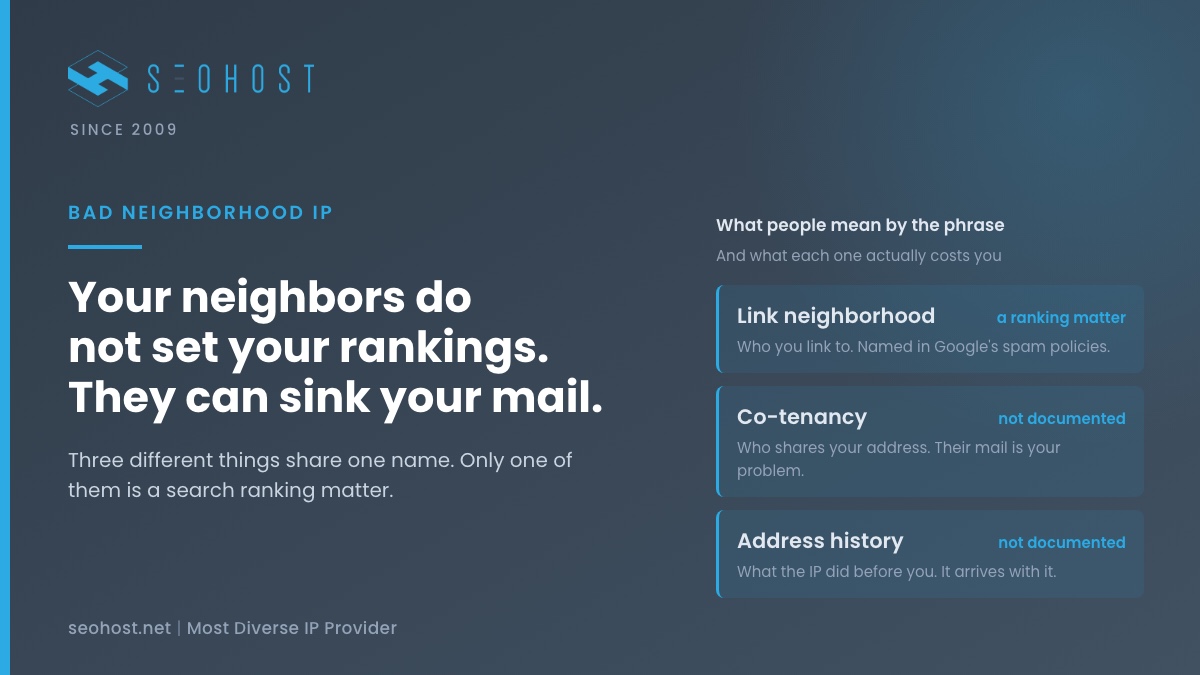
Bad Neighborhood IPs: What Sharing an IP With Spam Sites Actually Costs You
TL;DRA bad neighborhood IP is mostly not a ranking problem: Google’s spam policies describe links and behavior, not addresses. What an address’s history really costs you is rejected mail, challenged traffic and a cleanup you run yourself. We scanned the 512 addresses around our own site against two blocklists to show what a real neighborhood looks like, and how to check yours in five minutes.
Categories
- AI SEO
- Blogging
- International SEO
- Marketing
- News
- Search Engine Optimization
- SEO
- Web Hosting
- Webmaster
Social Links!
-

Horizontal Content vs. Vertical Content
If there’s one thing about any industry that always holds true, it’s that people love their buzzwords. And while such industry parlance can make things easier for someone who’s been around for a while, it can be downright overwhelming for newcomers to the field. That’s why we intend to keep doing our part to clear…
-

Wondering Why You’re Not Ranking on Google? Here’s Three Possibilities
If your content isn’t ranking—or if it was ranking but has suddenly dropped down the SERPs—you’re generally left up to your own devices when it comes to figuring out what went wrong. In our experience, however, the answer usually isn’t all that complicated. When content isn’t ranking on Google, it usually comes down to one…
-

Understanding the Different Types of Keywords
Keywords used to be simple. You’d enter your search terms, and you’d be presented with a list of results containing your keyword or phrase. Pages with more instances of that phrase ranked higher on this list. As you might expect, this system was incredibly easy to abuse. That’s why since then, both keywords and the…