SEO Hosting Blog
-
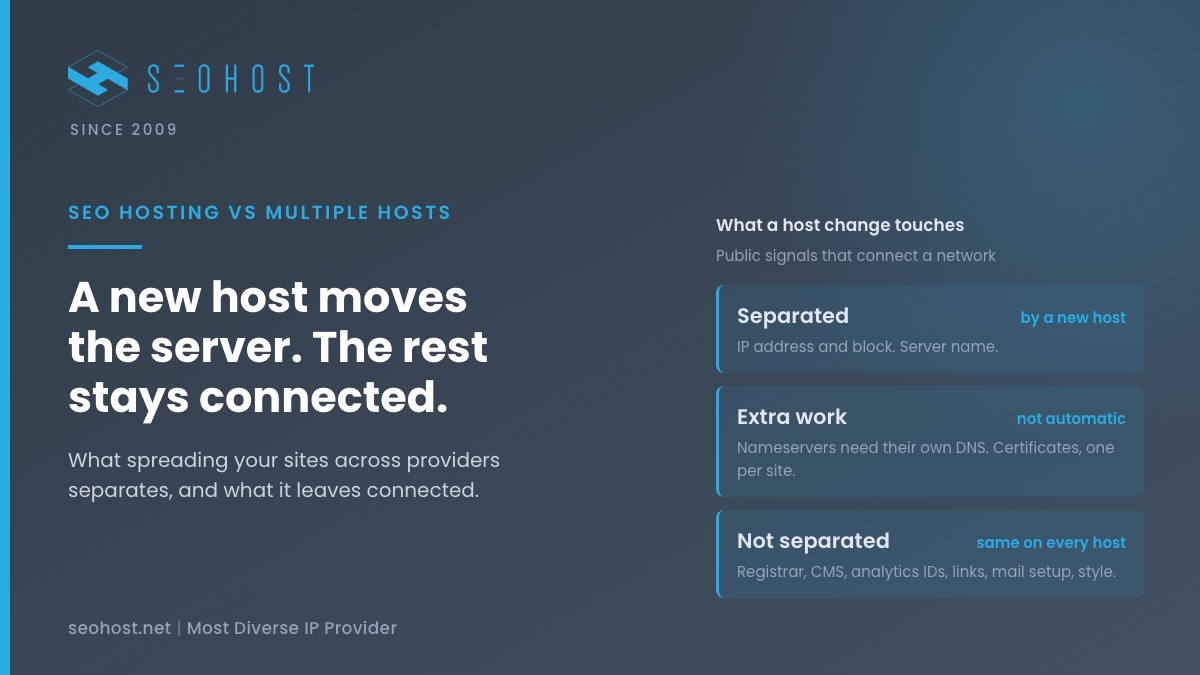
SEO Hosting vs Multiple Hosts: What Spreading Your Sites Really Costs
TL;DRSpreading a network across multiple hosts separates the IP address and the server, and Google has said neither one sets your rankings. Most of the other things that connect your sites, from the registrar record to the analytics ID, move with you to every host. What multiple hosts really adds is admin: a login, a renewal and a PHP schedule per site. For three sites that is a fair trade. Past that, we think one SEO host with separate addresses and nameservers per site is the better one, and the calculator below lets you test that against your own numbers.
-
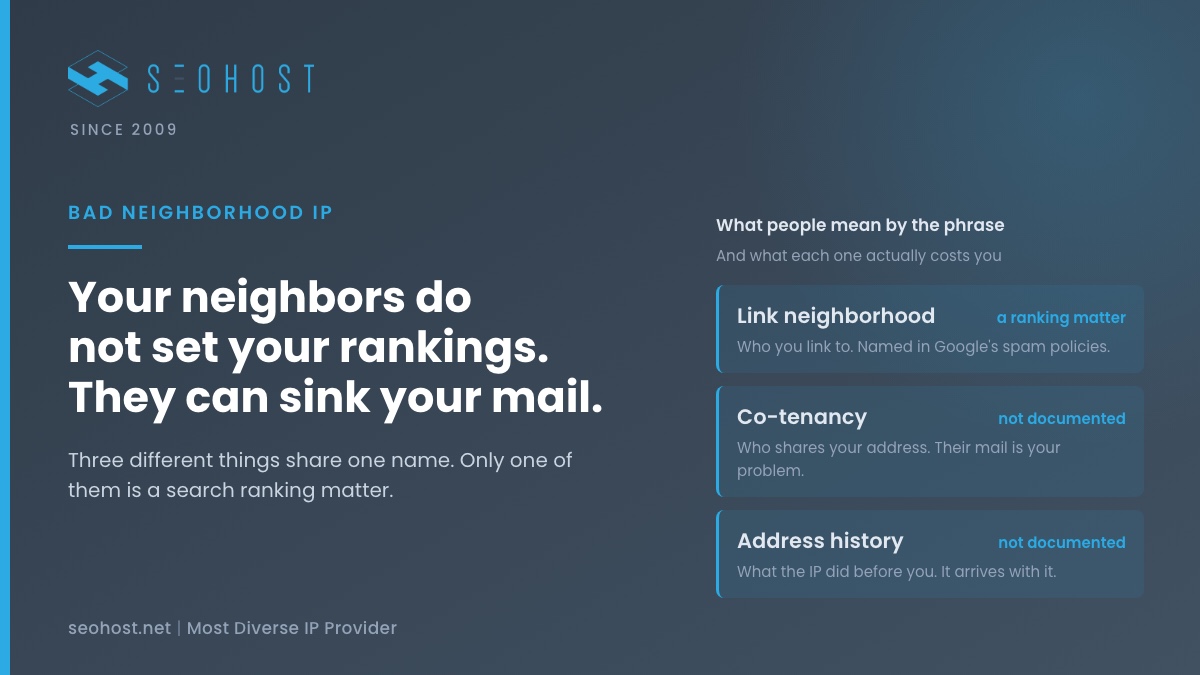
Bad Neighborhood IPs: What Sharing an IP With Spam Sites Actually Costs You
TL;DRA bad neighborhood IP is mostly not a ranking problem: Google’s spam policies describe links and behavior, not addresses. What an address’s history really costs you is rejected mail, challenged traffic and a cleanup you run yourself. We scanned the 512 addresses around our own site against two blocklists to show what a real neighborhood looks like, and how to check yours in five minutes.
Categories
- AI SEO
- Blogging
- International SEO
- Marketing
- News
- Search Engine Optimization
- SEO
- Web Hosting
- Webmaster
Social Links!
-

Google’s AI Mode: The SEO Hosting Implications You Can’t Ignore
Table of Contents Listen Post Podcast Introduction: a Strategic Crossroads You’ve probably felt that familiar mix of awe and unease lately—while conversational AI is exciting, the truth is, it could undercut your organic traffic. Google’s rollout of AI Overviews and AI Mode introduces chatbot‑style summaries that answer queries directly—often without any clicks through to your…
-

What Is Bard, Google’s Response to ChatGPT?
The arrival of OpenAI’s ChatGPT late last year kicked off a race between Google, Microsoft, and others to see who would be the first to bring conversational AI to the search space. ChatGPT is an astonishing technology, but it has a significant limitation: It knows nothing about events that happened after 2021, when its transformer-based…
-

Topics vs. Keywords and Their Role in SEO
Search engine optimization (SEO) constantly evolves, as SEO practitioners are well aware. However, ingrained SEO practices tend to linger long after they have outlived their usefulness. A purely keyword-based approach to SEO is a perfect example. Keywords remain vital to SEO, but if your content research begins and ends with keywords, you are working with…