SEO Hosting Blog
-
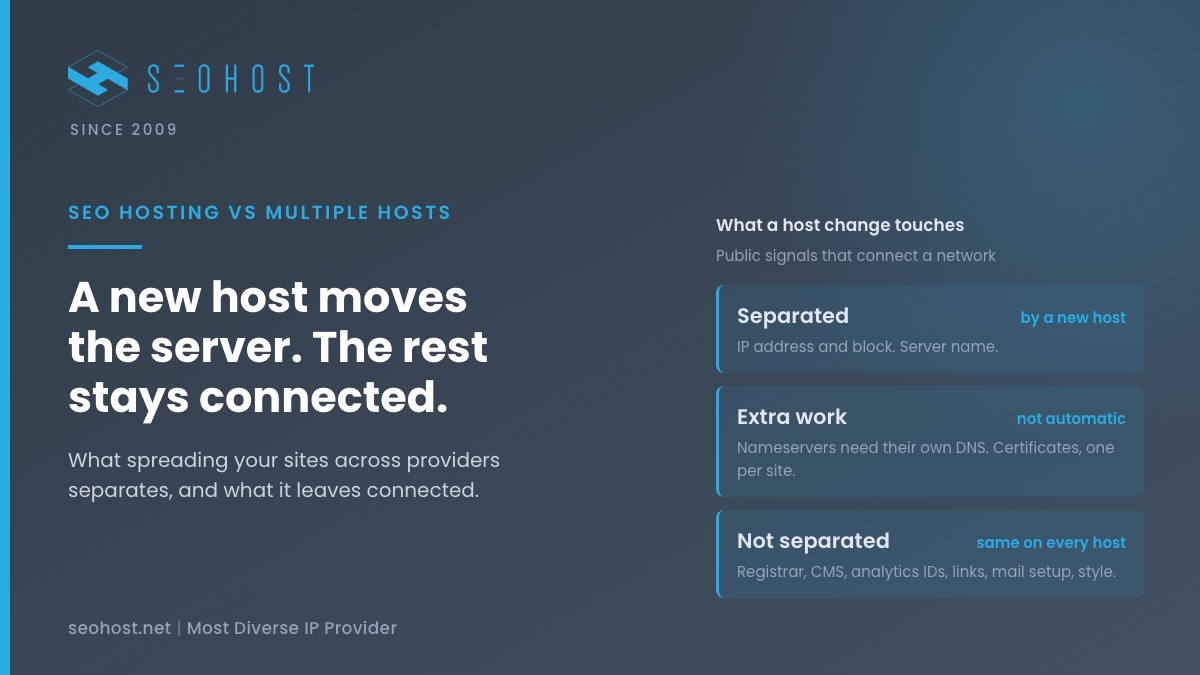
SEO Hosting vs Multiple Hosts: What Spreading Your Sites Really Costs
TL;DRSpreading a network across multiple hosts separates the IP address and the server, and Google has said neither one sets your rankings. Most of the other things that connect your sites, from the registrar record to the analytics ID, move with you to every host. What multiple hosts really adds is admin: a login, a renewal and a PHP schedule per site. For three sites that is a fair trade. Past that, we think one SEO host with separate addresses and nameservers per site is the better one, and the calculator below lets you test that against your own numbers.
-
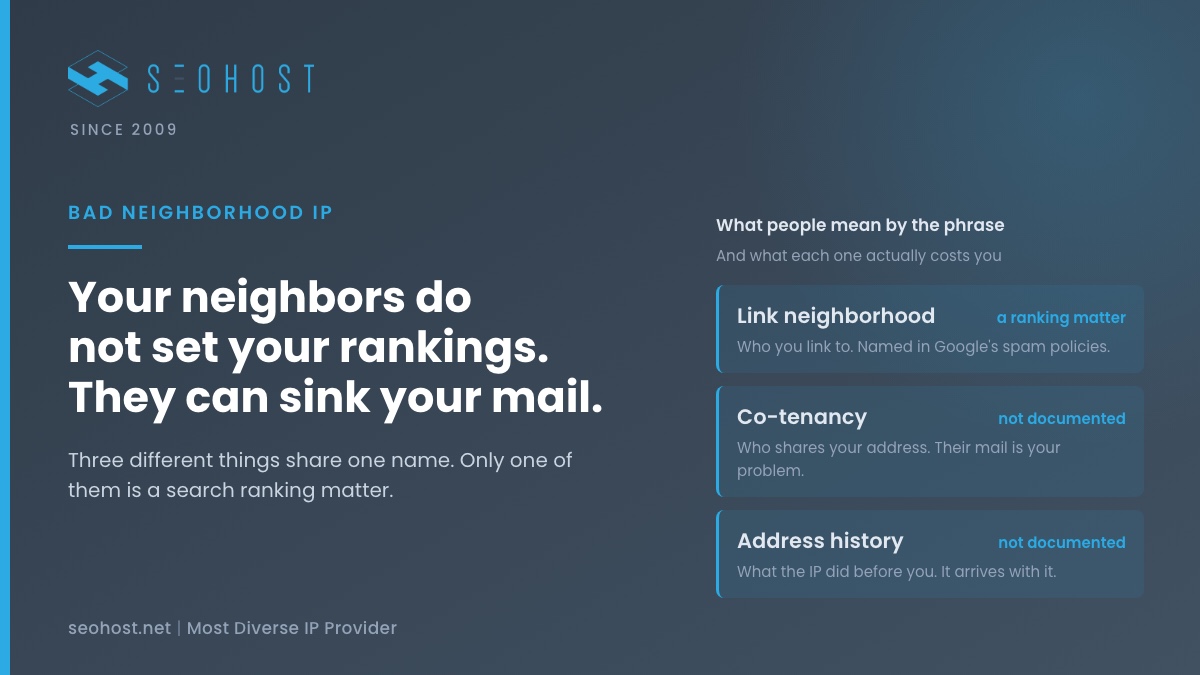
Bad Neighborhood IPs: What Sharing an IP With Spam Sites Actually Costs You
TL;DRA bad neighborhood IP is mostly not a ranking problem: Google’s spam policies describe links and behavior, not addresses. What an address’s history really costs you is rejected mail, challenged traffic and a cleanup you run yourself. We scanned the 512 addresses around our own site against two blocklists to show what a real neighborhood looks like, and how to check yours in five minutes.
Categories
- AI SEO
- Blogging
- International SEO
- Marketing
- News
- Search Engine Optimization
- SEO
- Web Hosting
- Webmaster
Social Links!
-

Website Not Ranking? The Problem Might Not Be Your SEO
Search engine optimization (SEO) is not foolproof. There are no guarantees. Rather, it’s about continually improving your site, continually working to grow your site and climb the search engine results page. Sometimes it’s possible to do everything right and not see any improvement in your ranking. In situations like this, there are a few possibilities.…
-
3 Excellent Free Resources for Topic and Keyword Research
Keyword and topic research can be tedious and tiresome even at the best of times. However, it’s also a necessary step in the creation of high-quality, compelling content. While you’re likely to be well-served through an all-in-one platform like Moz, don’t underestimate the power of the myriad free tools available online. Here are a few…
-

What You Need To Know About Online Reviews and SEO
According to research collected by Statista, online reviews are a major deciding factor when determining what brands to support or what products to purchase. In the U.S., for instance, 62 percent of respondents indicated that online reviews were very helpful to them, with 36 percent of users aged 25-34 using them for research. Reviews are,…