SEO Hosting Blog
-
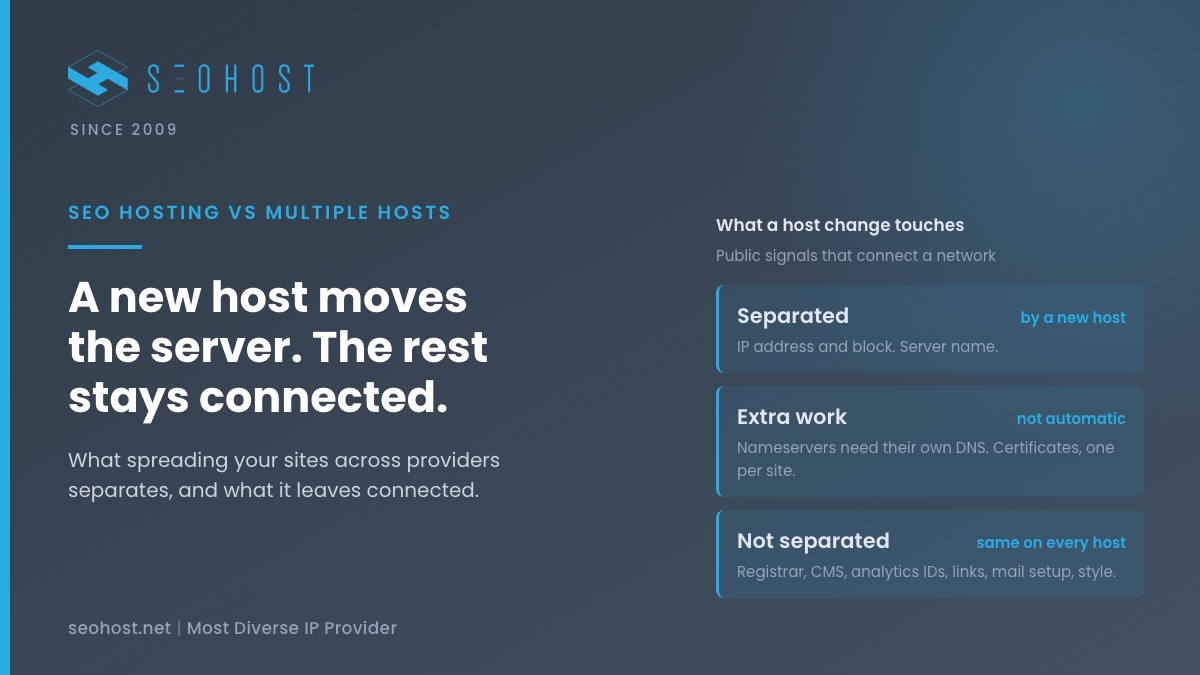
SEO Hosting vs Multiple Hosts: What Spreading Your Sites Really Costs
TL;DRSpreading a network across multiple hosts separates the IP address and the server, and Google has said neither one sets your rankings. Most of the other things that connect your sites, from the registrar record to the analytics ID, move with you to every host. What multiple hosts really adds is admin: a login, a renewal and a PHP schedule per site. For three sites that is a fair trade. Past that, we think one SEO host with separate addresses and nameservers per site is the better one, and the calculator below lets you test that against your own numbers.
-
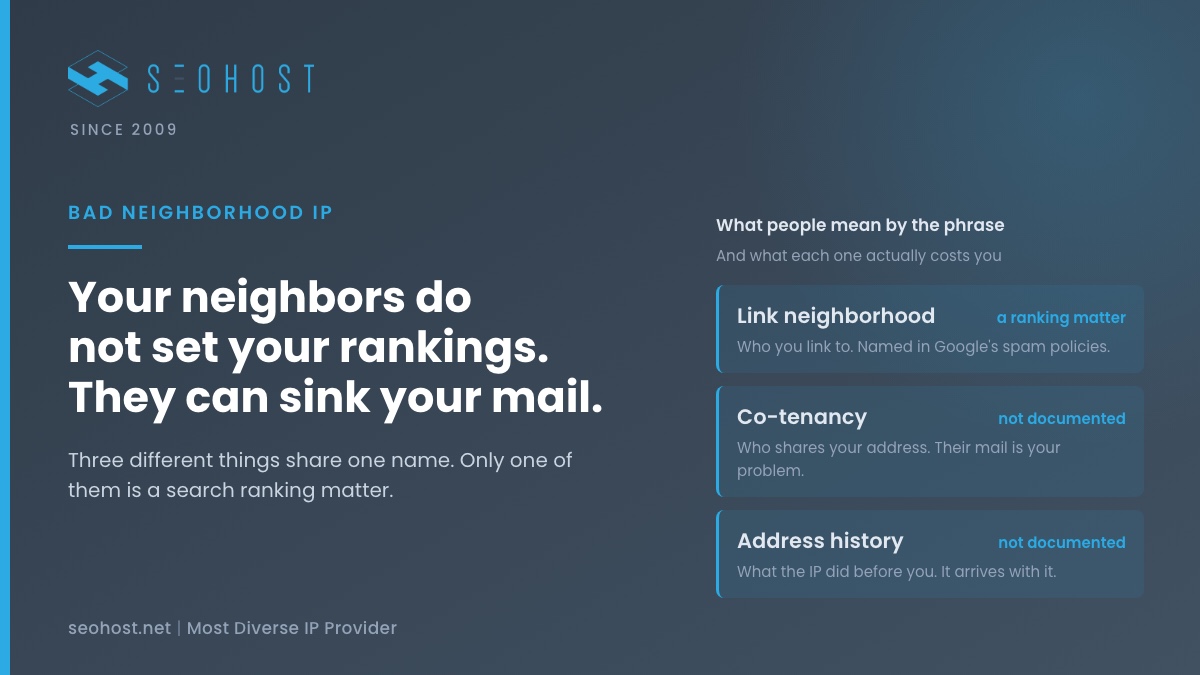
Bad Neighborhood IPs: What Sharing an IP With Spam Sites Actually Costs You
TL;DRA bad neighborhood IP is mostly not a ranking problem: Google’s spam policies describe links and behavior, not addresses. What an address’s history really costs you is rejected mail, challenged traffic and a cleanup you run yourself. We scanned the 512 addresses around our own site against two blocklists to show what a real neighborhood looks like, and how to check yours in five minutes.
Categories
- AI SEO
- Blogging
- International SEO
- Marketing
- News
- Search Engine Optimization
- SEO
- Web Hosting
- Webmaster
Social Links!
-

3 Things You Need to Work From Home as a Marketing Professional
Remote work is now the rule rather than the exception. As more and more businesses either by choice or by necessity put measures in place to support a distributed workforce, employees across industries are adapting to a world where they can work entirely from the comfort of their own home. Believe it or not, that’s…
-

The Role of Content Marketing in Local SEO
Properly-researched, properly-optimized content is at the core of every successful website. This holds true regardless of whether you’re targeting on a local scale or a global one. That said, there are a few things about local SEO that requires a unique approach to content marketing.
-
3 Core Components of a Successful Facebook Business Page
It goes without saying that social media is an incredibly powerful marketing tool, especially for small businesses. Facebook is still the reigning titan in that regard. Not only does it have the potential to significantly improve your reach, but it also allows you to engage and communicate with your audience on a deeper level than…