SEO Hosting Blog
-

SEO Hosting vs Multiple Hosts: What Spreading Your Sites Really Costs
TL;DRSpreading a network across multiple hosts separates the IP address and the server, and Google has said neither one sets your rankings. Most of the other things that connect your sites, from the registrar record to the analytics ID, move with you to every host. What multiple hosts really adds is admin: a login, a renewal and a PHP schedule per site. For three sites that is a fair trade. Past that, we think one SEO host with separate addresses and nameservers per site is the better one, and the calculator below lets you test that against your own numbers.
-
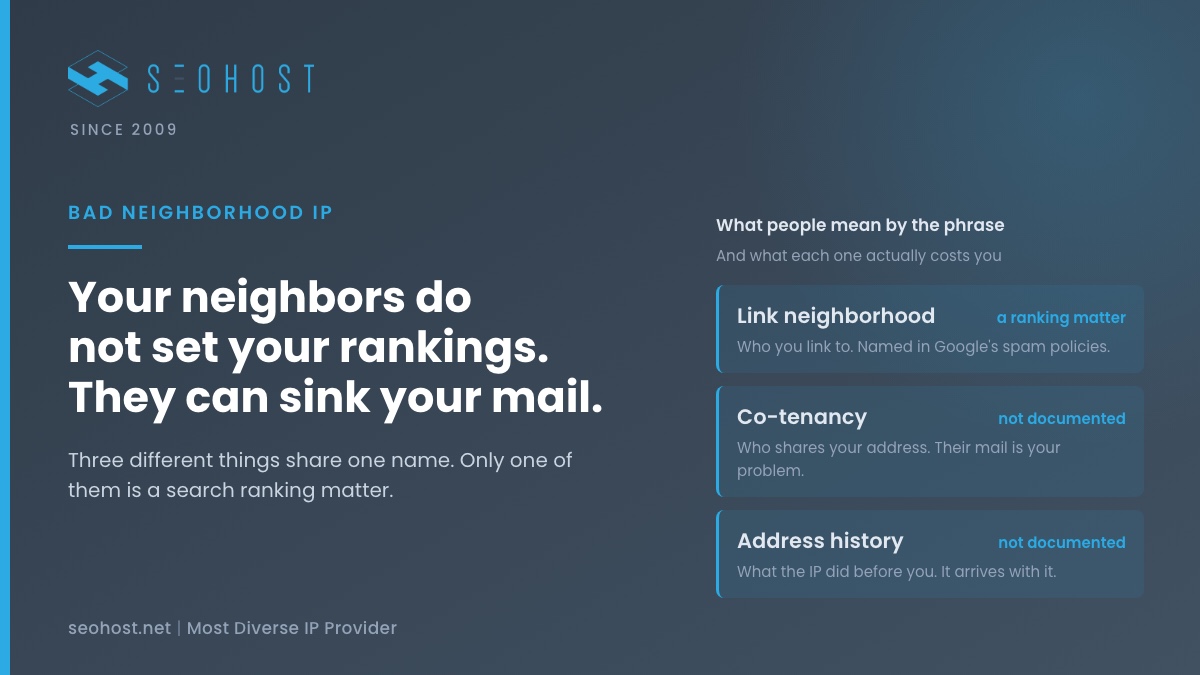
Bad Neighborhood IPs: What Sharing an IP With Spam Sites Actually Costs You
TL;DRA bad neighborhood IP is mostly not a ranking problem: Google’s spam policies describe links and behavior, not addresses. What an address’s history really costs you is rejected mail, challenged traffic and a cleanup you run yourself. We scanned the 512 addresses around our own site against two blocklists to show what a real neighborhood looks like, and how to check yours in five minutes.
Categories
- AI SEO
- Blogging
- International SEO
- Marketing
- News
- Search Engine Optimization
- SEO
- Web Hosting
- Webmaster
Social Links!
-

Do Chatbots Influence SEO?
Chatbots are the latest fad in web design, particularly in the eCommerce space. The idea is that by equipping one’s website with artificial-intelligence-driven support software, a brand can provide a better overall customer experience. This isn’t entirely untrue.
-

What Is Keyword Cannibalization and How Can You Stop Doing It?
It’s one of the most common search engine optimization mistakes on the web. Many website owners do it without even realizing it. We’re speaking about keyword cannibalization.
-

What Is Evergreen Content?
There’s value in publishing timely content that leverages current events. No one can discount that. However, from a search engine optimization perspective, the power of that content to attract new readers and leads will inevitably fade.