SEO Hosting Blog
-
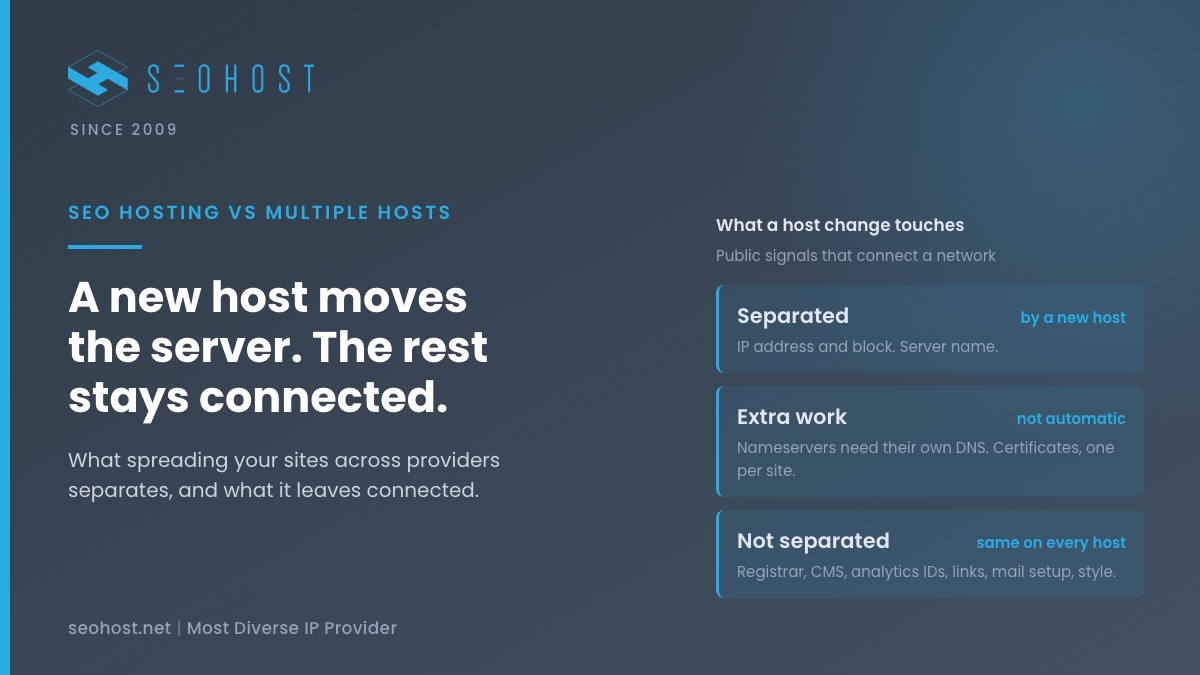
SEO Hosting vs Multiple Hosts: What Spreading Your Sites Really Costs
TL;DRSpreading a network across multiple hosts separates the IP address and the server, and Google has said neither one sets your rankings. Most of the other things that connect your sites, from the registrar record to the analytics ID, move with you to every host. What multiple hosts really adds is admin: a login, a renewal and a PHP schedule per site. For three sites that is a fair trade. Past that, we think one SEO host with separate addresses and nameservers per site is the better one, and the calculator below lets you test that against your own numbers.
-
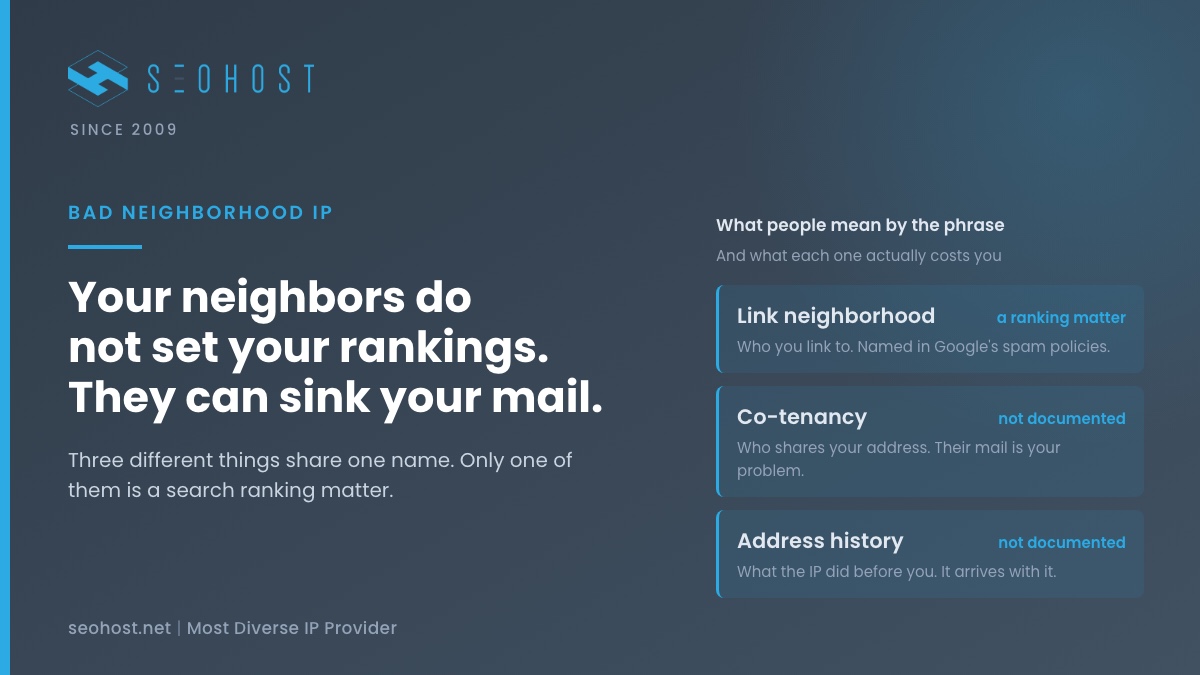
Bad Neighborhood IPs: What Sharing an IP With Spam Sites Actually Costs You
TL;DRA bad neighborhood IP is mostly not a ranking problem: Google’s spam policies describe links and behavior, not addresses. What an address’s history really costs you is rejected mail, challenged traffic and a cleanup you run yourself. We scanned the 512 addresses around our own site against two blocklists to show what a real neighborhood looks like, and how to check yours in five minutes.
Categories
- AI SEO
- Blogging
- International SEO
- Marketing
- News
- Search Engine Optimization
- SEO
- Web Hosting
- Webmaster
Social Links!
-

How to Protect Your Website from Negative SEO Attacks
The early days of search engines were reminiscent of the wild west. Underhanded or downright malicious search engine optimization (SEO) was commonplace, and many of the top spots on the search engine results page were taken up by low-quality, misleading spam sites. It didn’t take long for Google to correct the issue, and it’s been…
-

A Quick Guide to Planning Your SEO Budget
Wondering how much you should spend on search engine optimization? You’re not alone. The industry doesn’t exactly have a history of making itself accessible to outsiders, after all. It also doesn’t help that so many SEO agencies don’t do much beyond selling the digital marketing equivalent of snake oil. Small wonder, then, that many small…
-

What’s the Difference Between On-Page SEO and Off-Page SEO?
One thing many people don’t know about search engine optimization is that it actually consists of two distinct disciplines—on-page SEO and off-page SEO. At first glance, the difference between the two should be fairly obvious. It’s right there in the name, after all. At the same time, we still feel it’s important to take a…