SEO Hosting Blog
-
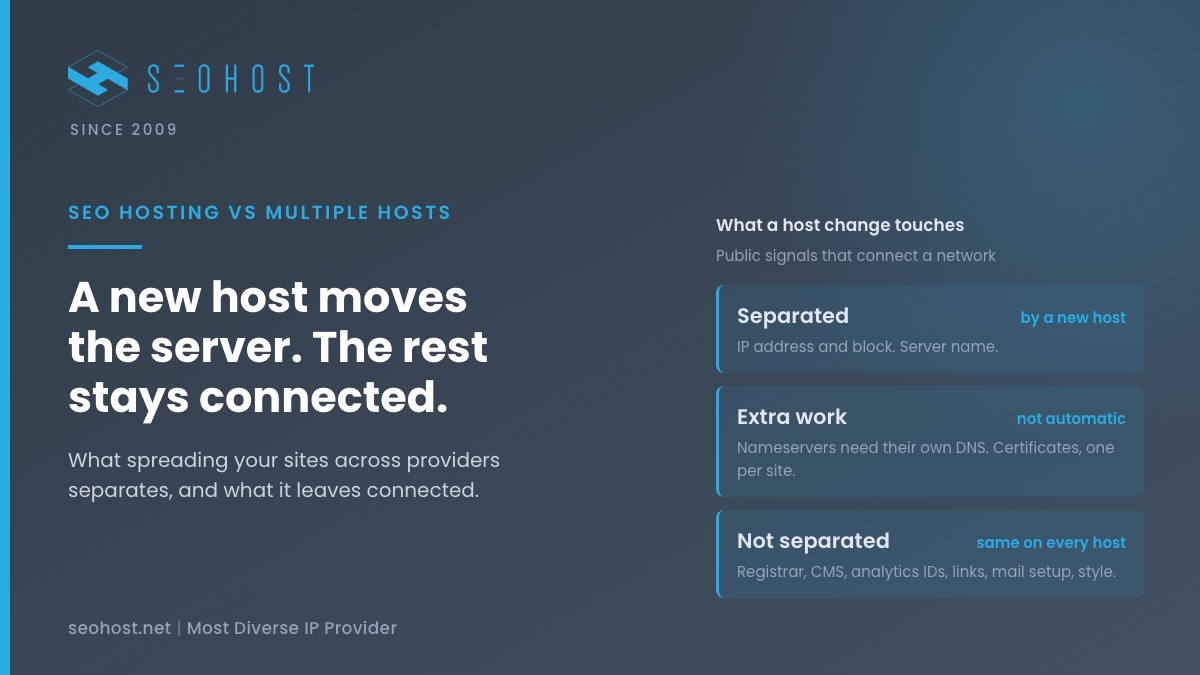
SEO Hosting vs Multiple Hosts: What Spreading Your Sites Really Costs
TL;DRSpreading a network across multiple hosts separates the IP address and the server, and Google has said neither one sets your rankings. Most of the other things that connect your sites, from the registrar record to the analytics ID, move with you to every host. What multiple hosts really adds is admin: a login, a renewal and a PHP schedule per site. For three sites that is a fair trade. Past that, we think one SEO host with separate addresses and nameservers per site is the better one, and the calculator below lets you test that against your own numbers.
-
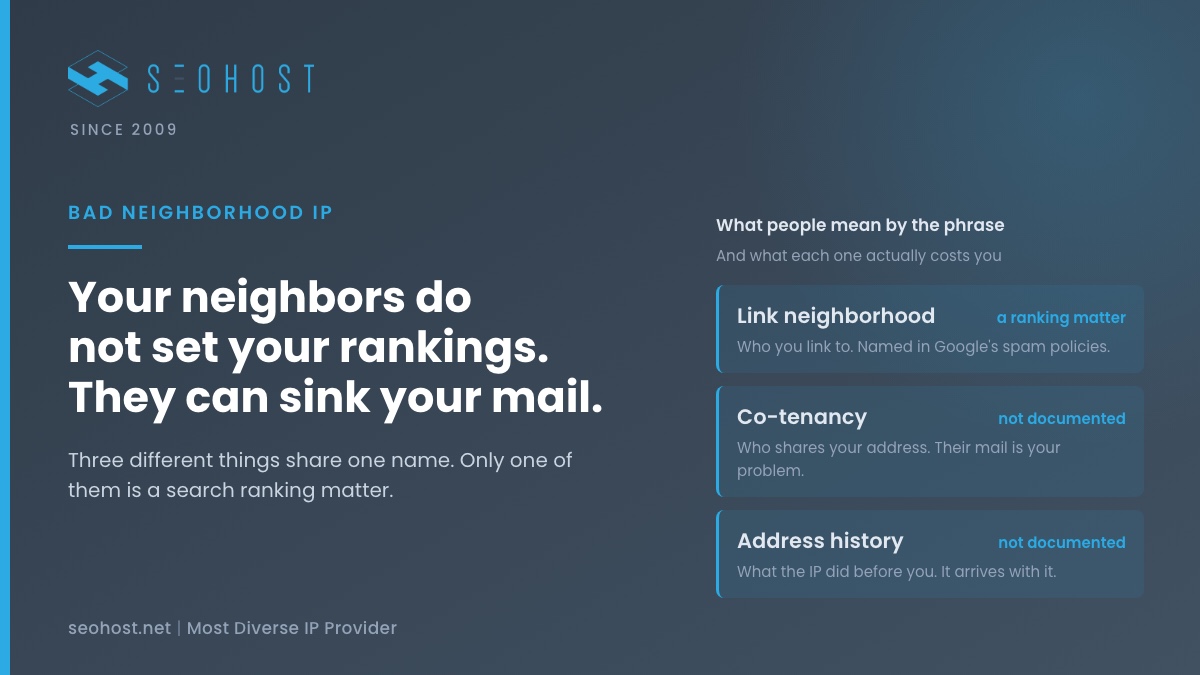
Bad Neighborhood IPs: What Sharing an IP With Spam Sites Actually Costs You
TL;DRA bad neighborhood IP is mostly not a ranking problem: Google’s spam policies describe links and behavior, not addresses. What an address’s history really costs you is rejected mail, challenged traffic and a cleanup you run yourself. We scanned the 512 addresses around our own site against two blocklists to show what a real neighborhood looks like, and how to check yours in five minutes.
Categories
- AI SEO
- Blogging
- International SEO
- Marketing
- News
- Search Engine Optimization
- SEO
- Web Hosting
- Webmaster
Social Links!
-

Why SEO Cannot Produce Guaranteed Results
Experts always say you’re doing search engine optimization (SEO) all wrong.
-

Why Key Phrases, not Keywords, Are Important in SEO
Keywords are on the way out. No, I’m not saying search engine optimization (SEO) is no longer relevant. As long as search engines exist, SEO must remain a fixture in your brand’s digital marketing strategy. What I am saying is that the relevance of single-word search terms is fading fast.
-

How to Understand What Brings People to Your Website
Keyword research is only the first step in search engine optimization. It’s an important foundation, don’t get me wrong. At the same time, just as no site metric exists in a vacuum, keywords lose a lot of value if you understand nothing about the people typing them. In short, you know what searches bring people…