SEO Hosting Blog
-
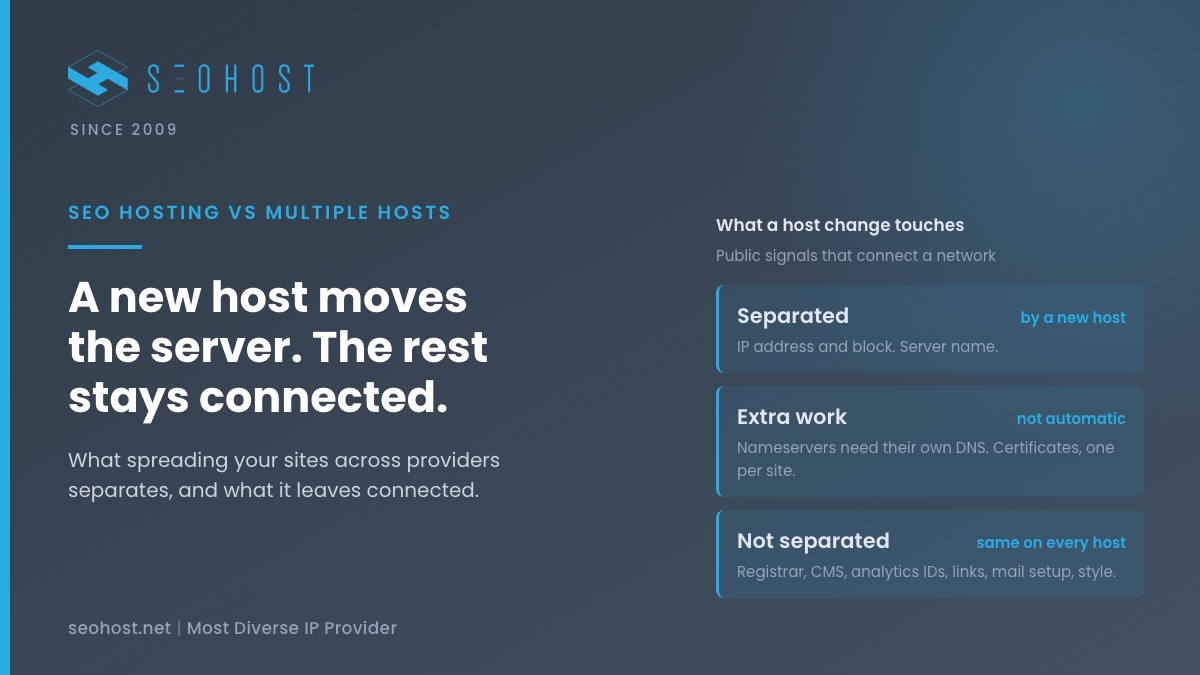
SEO Hosting vs Multiple Hosts: What Spreading Your Sites Really Costs
TL;DRSpreading a network across multiple hosts separates the IP address and the server, and Google has said neither one sets your rankings. Most of the other things that connect your sites, from the registrar record to the analytics ID, move with you to every host. What multiple hosts really adds is admin: a login, a renewal and a PHP schedule per site. For three sites that is a fair trade. Past that, we think one SEO host with separate addresses and nameservers per site is the better one, and the calculator below lets you test that against your own numbers.
-
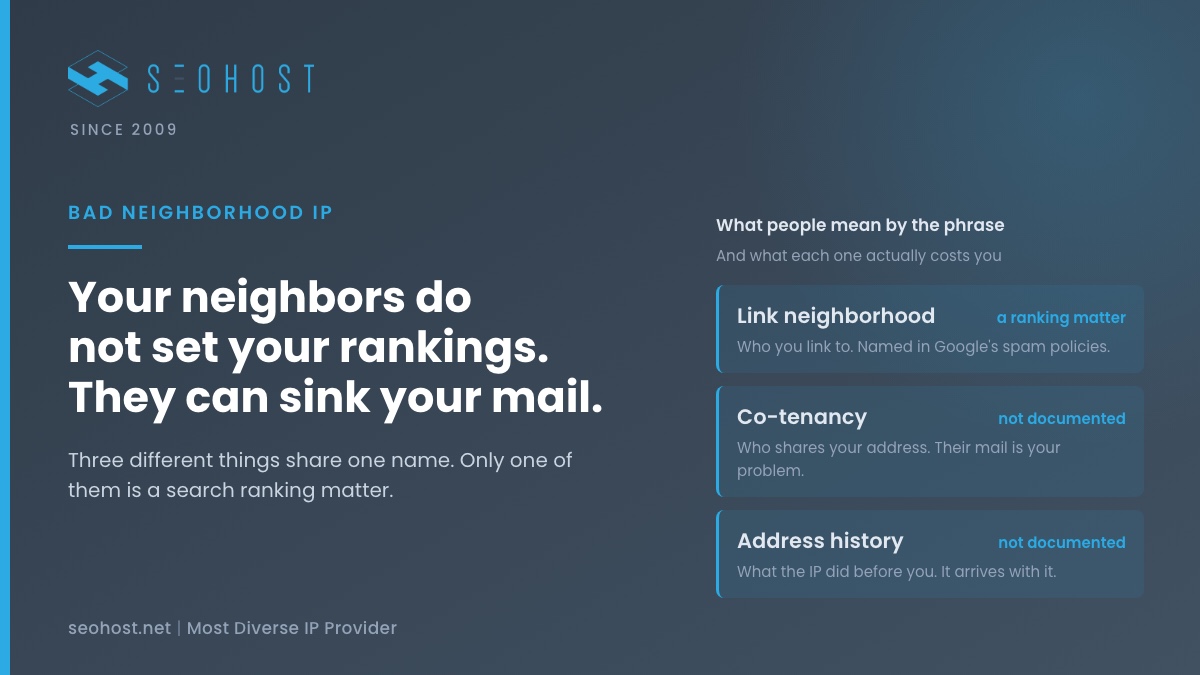
Bad Neighborhood IPs: What Sharing an IP With Spam Sites Actually Costs You
TL;DRA bad neighborhood IP is mostly not a ranking problem: Google’s spam policies describe links and behavior, not addresses. What an address’s history really costs you is rejected mail, challenged traffic and a cleanup you run yourself. We scanned the 512 addresses around our own site against two blocklists to show what a real neighborhood looks like, and how to check yours in five minutes.
Categories
- AI SEO
- Blogging
- International SEO
- Marketing
- News
- Search Engine Optimization
- SEO
- Web Hosting
- Webmaster
Social Links!
-

Here’s Why You Should Avoid Using Paywalls
Please subscribe to continue reading. Nearly all of us have encountered that simple phrase at least once. And for most, it’s among the most frustrating things one could read. After finding what we thought was the perfect answer to our question on the search engine results page, we instead encountered a publisher reaching desperately for…
-

B2B SEO vs. B2C SEO
You already know there is a multitude of differences when comparing business-to-business sales to business-to-consumer sales. You’ve likely also surmised that these differences extend to search engine optimization. And you’d be correct in that. Because B2B and B2C users have such wildly different needs, the content you create and the keywords you use must also…
-

How Would Search Engine Optimization Change if Google’s Algorithm Were Public?
As Google continues to battle lawsuits, there’s talk that it may be forced to reveal its algorithm. Could this actually happen? And what would change if it did?