SEO Hosting Blog
-
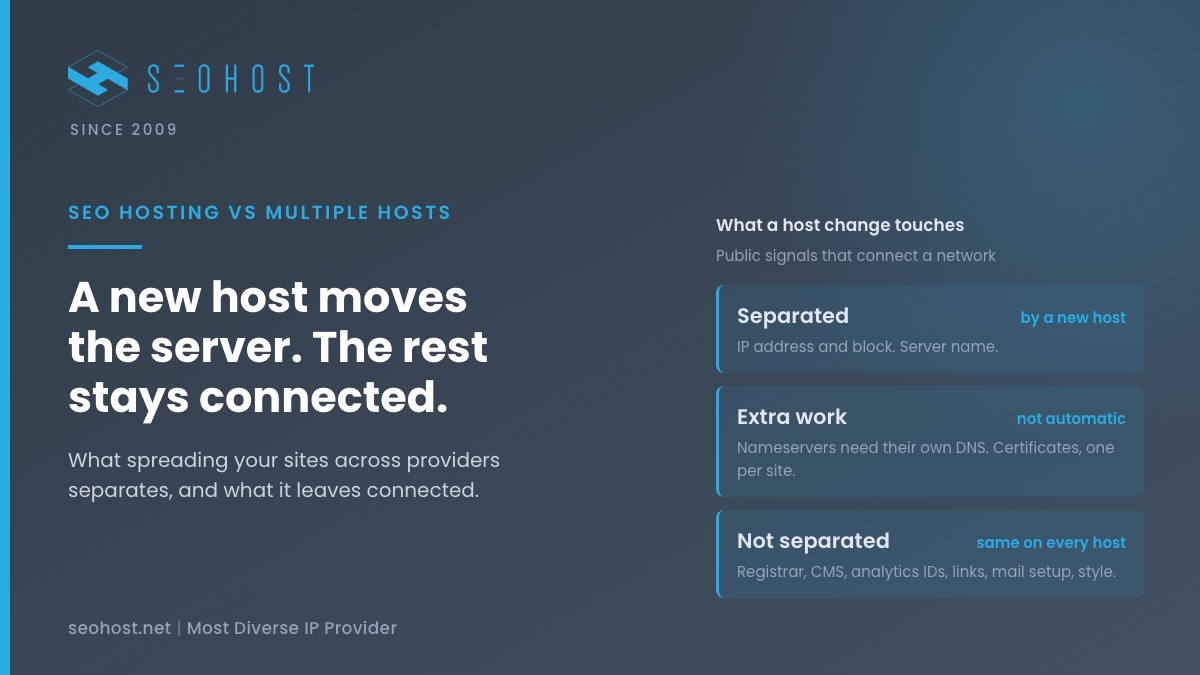
SEO Hosting vs Multiple Hosts: What Spreading Your Sites Really Costs
TL;DRSpreading a network across multiple hosts separates the IP address and the server, and Google has said neither one sets your rankings. Most of the other things that connect your sites, from the registrar record to the analytics ID, move with you to every host. What multiple hosts really adds is admin: a login, a renewal and a PHP schedule per site. For three sites that is a fair trade. Past that, we think one SEO host with separate addresses and nameservers per site is the better one, and the calculator below lets you test that against your own numbers.
-
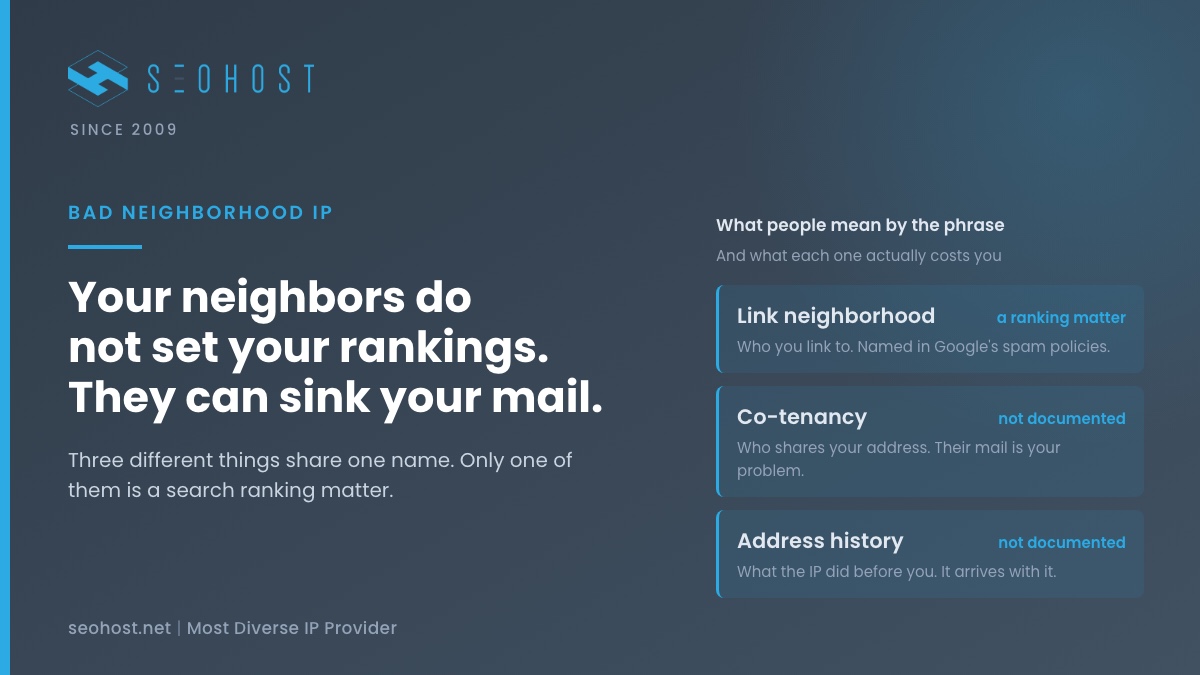
Bad Neighborhood IPs: What Sharing an IP With Spam Sites Actually Costs You
TL;DRA bad neighborhood IP is mostly not a ranking problem: Google’s spam policies describe links and behavior, not addresses. What an address’s history really costs you is rejected mail, challenged traffic and a cleanup you run yourself. We scanned the 512 addresses around our own site against two blocklists to show what a real neighborhood looks like, and how to check yours in five minutes.
Categories
- AI SEO
- Blogging
- International SEO
- Marketing
- News
- Search Engine Optimization
- SEO
- Web Hosting
- Webmaster
Social Links!
-

How to Prevent Your Site From Having a Negative Bounce Rate
After a quick Google search, a user visits one of the first websites the search engine suggests. After spending only a few minutes on the website’s landing page, they close their browser tab and navigate elsewhere. This is what’s known, in search terms, as a bounce.
-

3 Ways To Improve Your Shopping Cart Abandonment Rate
Per research by ecommerce analytics firm SaleCycle, the average global rate of shopping cart abandonment across all industries in Q1 2018 was nearly 76 percent. Even more shockingly, that figure represents nearly a 2 percent decrease from 2017’s statistics. Upsetting, isn’t it? It’s long been known that shopping cart abandonment is one of the leading…
-

3 Ways to Improve Your SEO Knowledge
Want to learn more about search engine optimization (SEO)? You should. Knowledge of SEO might not be as critical as it used to be, but it’s still one of the core pillars of success on the web. So whether you’re establishing foundational SEO skills or shoring up existing knowledge, it’s always worthwhile to learn more.…