SEO Hosting Blog
-
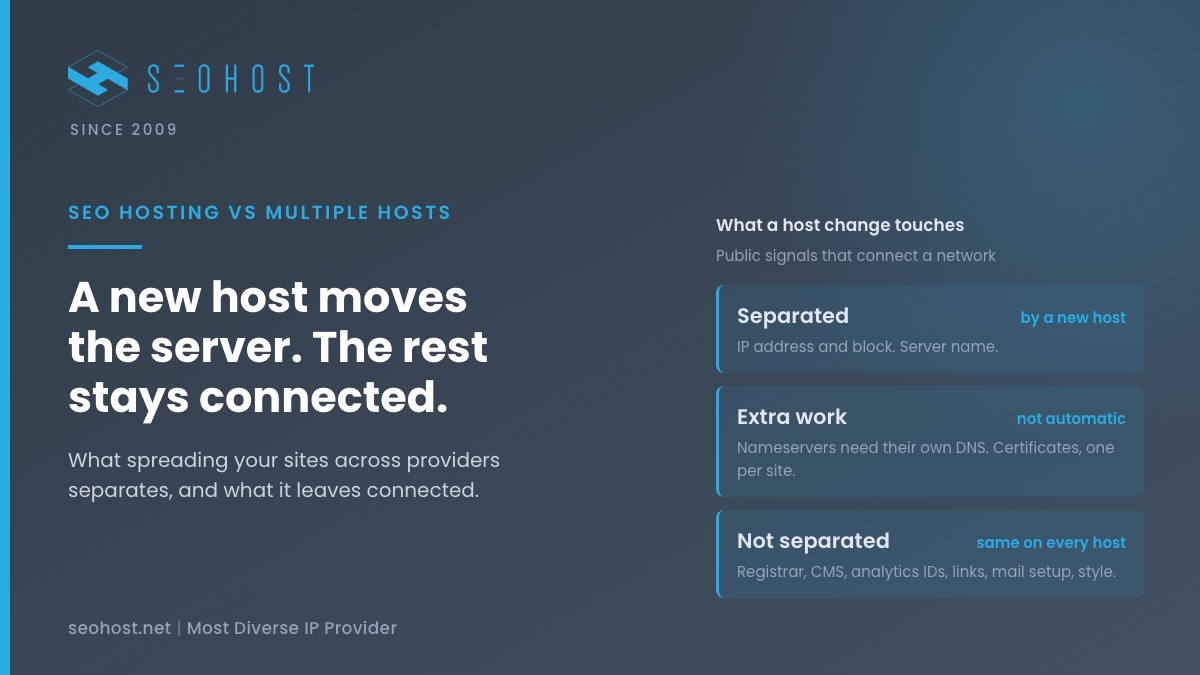
SEO Hosting vs Multiple Hosts: What Spreading Your Sites Really Costs
TL;DRSpreading a network across multiple hosts separates the IP address and the server, and Google has said neither one sets your rankings. Most of the other things that connect your sites, from the registrar record to the analytics ID, move with you to every host. What multiple hosts really adds is admin: a login, a renewal and a PHP schedule per site. For three sites that is a fair trade. Past that, we think one SEO host with separate addresses and nameservers per site is the better one, and the calculator below lets you test that against your own numbers.
-
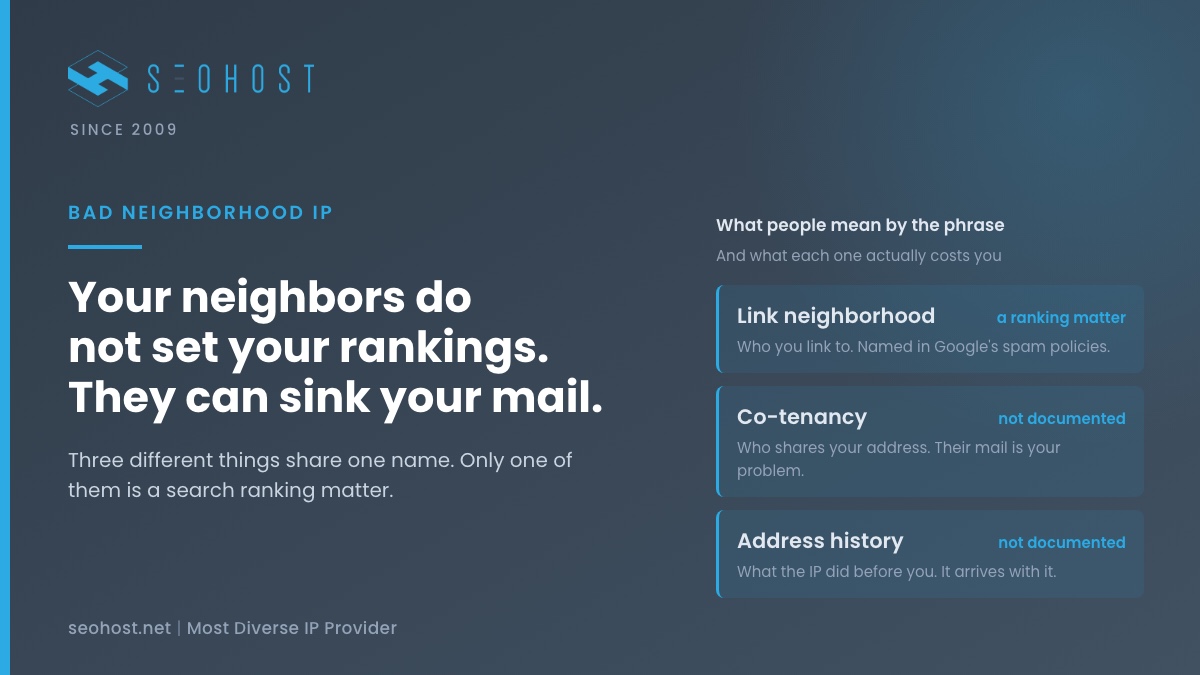
Bad Neighborhood IPs: What Sharing an IP With Spam Sites Actually Costs You
TL;DRA bad neighborhood IP is mostly not a ranking problem: Google’s spam policies describe links and behavior, not addresses. What an address’s history really costs you is rejected mail, challenged traffic and a cleanup you run yourself. We scanned the 512 addresses around our own site against two blocklists to show what a real neighborhood looks like, and how to check yours in five minutes.
Categories
- AI SEO
- Blogging
- International SEO
- Marketing
- News
- Search Engine Optimization
- SEO
- Web Hosting
- Webmaster
Social Links!
-

Three Ways You Can Use SEO To Improve Sales
Imagine, if you will, that someone opens up a new store in a busy shopping center. It’s a prime location, and they know they sell stuff that everyone’s going to love. In fact, they’re so confident in their store’s success that they don’t even advertise it.
-

How To Change Web Hosting Providers – A Step-By-Step Guide
Sometimes, a web host isn’t quite what you expected. Maybe you’ve been hit with a ton of unexpected, hidden fees. Maybe the level of performance they promised isn’t quite what they delivered. Maybe getting in touch with their customer support team is like pulling teeth.
-

Which Is The Best Option For Blogging: WordPress, Blogger, or Wix?
Whether you’re a brand that’s looking to bring in more customers or simply a writer with some big ideas, it’s now easier than ever to share your thoughts with the world. The first step in doing so is to choose the right blogging platform. It’s also the most difficult.