SEO Hosting Blog
-
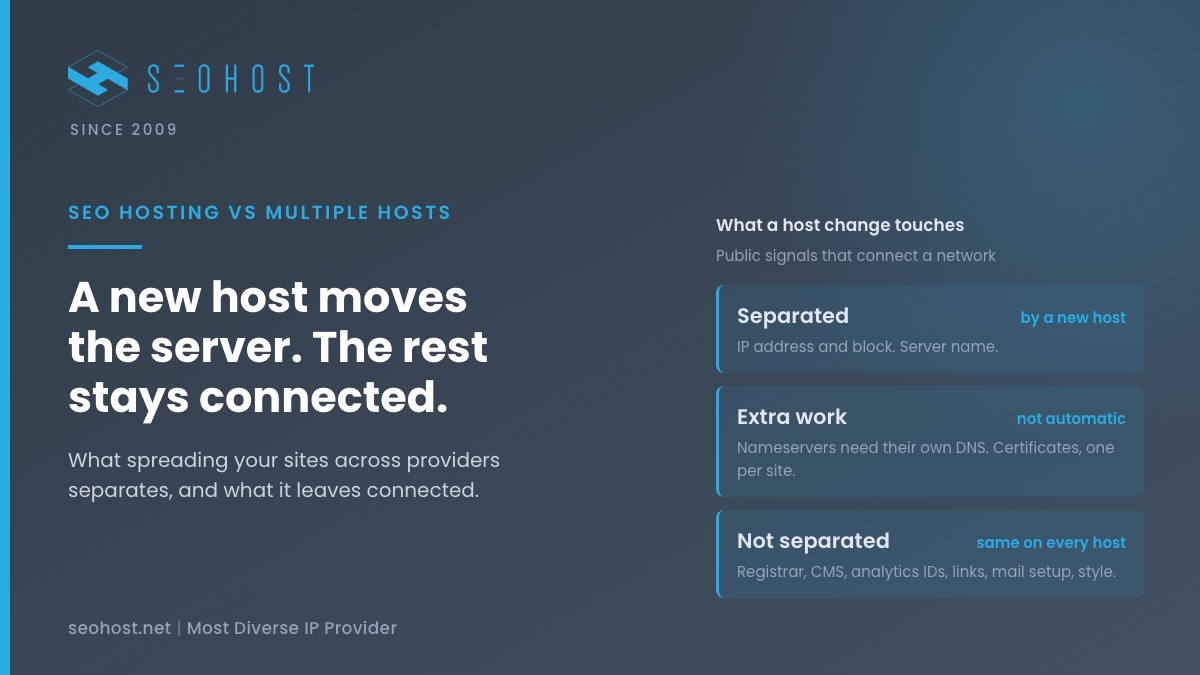
SEO Hosting vs Multiple Hosts: What Spreading Your Sites Really Costs
TL;DRSpreading a network across multiple hosts separates the IP address and the server, and Google has said neither one sets your rankings. Most of the other things that connect your sites, from the registrar record to the analytics ID, move with you to every host. What multiple hosts really adds is admin: a login, a renewal and a PHP schedule per site. For three sites that is a fair trade. Past that, we think one SEO host with separate addresses and nameservers per site is the better one, and the calculator below lets you test that against your own numbers.
-
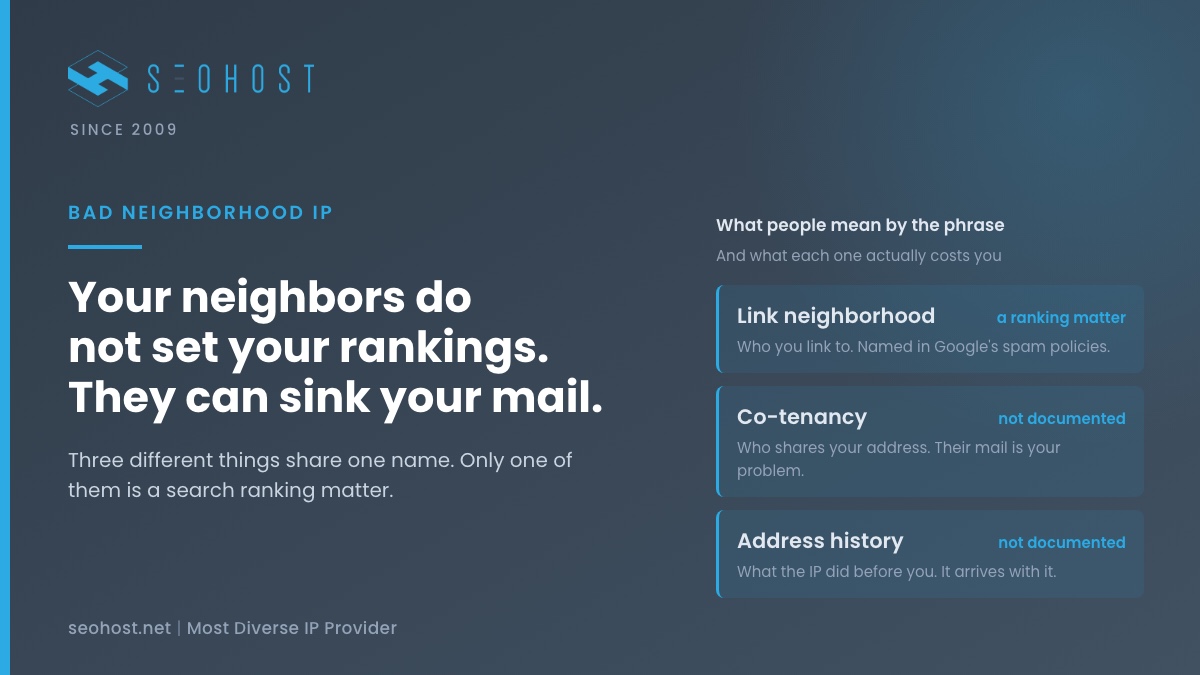
Bad Neighborhood IPs: What Sharing an IP With Spam Sites Actually Costs You
TL;DRA bad neighborhood IP is mostly not a ranking problem: Google’s spam policies describe links and behavior, not addresses. What an address’s history really costs you is rejected mail, challenged traffic and a cleanup you run yourself. We scanned the 512 addresses around our own site against two blocklists to show what a real neighborhood looks like, and how to check yours in five minutes.
Categories
- AI SEO
- Blogging
- International SEO
- Marketing
- News
- Search Engine Optimization
- SEO
- Web Hosting
- Webmaster
Social Links!
-

Why Patience is the Most Important Virtue in SEO
As the adage goes, good things come to those who wait. These days, that saying seems like more of an outmoded cliche than genuine advice. We live in a world built to stoke our impatience, a civilization defined by instant gratification. In such a world, it’s all too easy to mistakenly assume that anything requiring…
-

5 Things to Account For When Planning Your SEO Budget
How much should you spend on search engine optimization (SEO)? That’s a challenging question. One made all the more difficult by the fact that no two companies will have the same answer. There are many different factors at play where SEO is concerned. We’ll go over some of the most prominent. Here are five things…
-

Using Press Releases for Search Engine Optimization: The Do’s and Don’ts
Thinking of adding regular press releases to your search engine optimization strategy? That’s a great plan, especially if you operate primarily in the B2B space. However, it’s important that you understand a few things about what they are and how they work. Here are a few things you should—and shouldn’t—do with your press releases. Do:…