SEO Hosting Blog
-
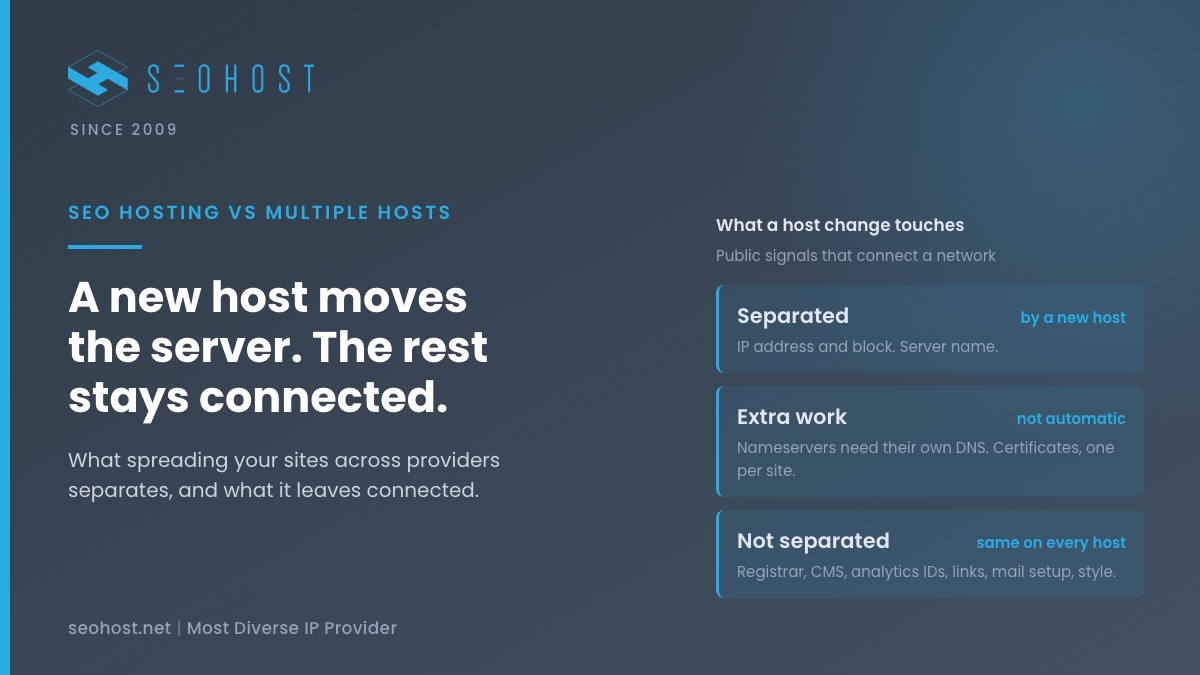
SEO Hosting vs Multiple Hosts: What Spreading Your Sites Really Costs
TL;DRSpreading a network across multiple hosts separates the IP address and the server, and Google has said neither one sets your rankings. Most of the other things that connect your sites, from the registrar record to the analytics ID, move with you to every host. What multiple hosts really adds is admin: a login, a renewal and a PHP schedule per site. For three sites that is a fair trade. Past that, we think one SEO host with separate addresses and nameservers per site is the better one, and the calculator below lets you test that against your own numbers.
-
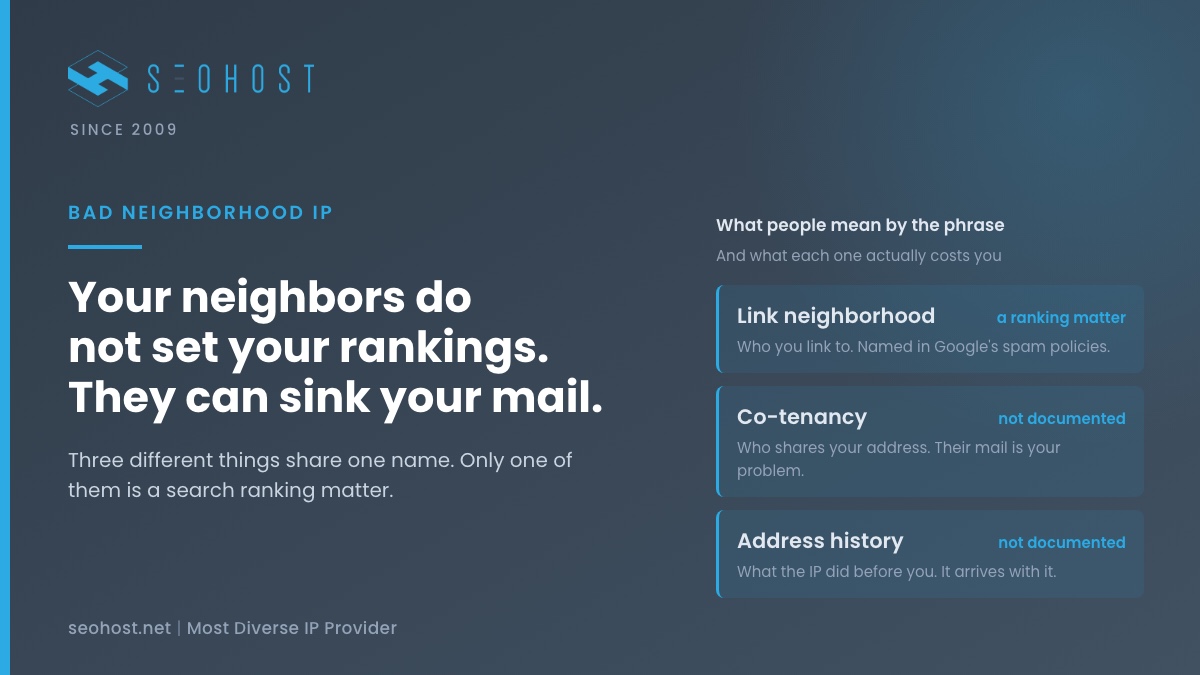
Bad Neighborhood IPs: What Sharing an IP With Spam Sites Actually Costs You
TL;DRA bad neighborhood IP is mostly not a ranking problem: Google’s spam policies describe links and behavior, not addresses. What an address’s history really costs you is rejected mail, challenged traffic and a cleanup you run yourself. We scanned the 512 addresses around our own site against two blocklists to show what a real neighborhood looks like, and how to check yours in five minutes.
Categories
- AI SEO
- Blogging
- International SEO
- Marketing
- News
- Search Engine Optimization
- SEO
- Web Hosting
- Webmaster
Social Links!
-

Struggling with a Search Engine Optimization Skill Gap? Here’s What You Can Do
Given that it’s been plaguing the IT sector for years, it was inevitable that the ongoing digital talent shortage would eventually sink its talents into marketing and search engine optimization (SEO). As noted by MarketingWeek, upskilling has become crucial for specialized agencies and ordinary businesses alike. An annual survey from online marketing agency Verbli, meanwhile,…
-

Why You Should Include Sentiment Research With Your Keyword Research
Like most content creators with a mind for search engine optimization, you understand the importance of thorough keyword research. It’s at the heart of developing an effective inbound marketing strategy. And for any given piece of content, it’s crucial in determining which keywords you should focus on when it actually comes time to write. What…
-

Word Count is Not A Ranking Factor, But it Does Matter
If you’re like many people, you probably believe in the unimpeachable word count. The notion is that the longer you make a piece, the better it will perform on the search engine results page. The idea is that there’s some sort of magic ‘sweet spot’ for content length that will land you on the first…