SEO Hosting Blog
-

SEO Hosting vs Multiple Hosts: What Spreading Your Sites Really Costs
TL;DRSpreading a network across multiple hosts separates the IP address and the server, and Google has said neither one sets your rankings. Most of the other things that connect your sites, from the registrar record to the analytics ID, move with you to every host. What multiple hosts really adds is admin: a login, a renewal and a PHP schedule per site. For three sites that is a fair trade. Past that, we think one SEO host with separate addresses and nameservers per site is the better one, and the calculator below lets you test that against your own numbers.
-
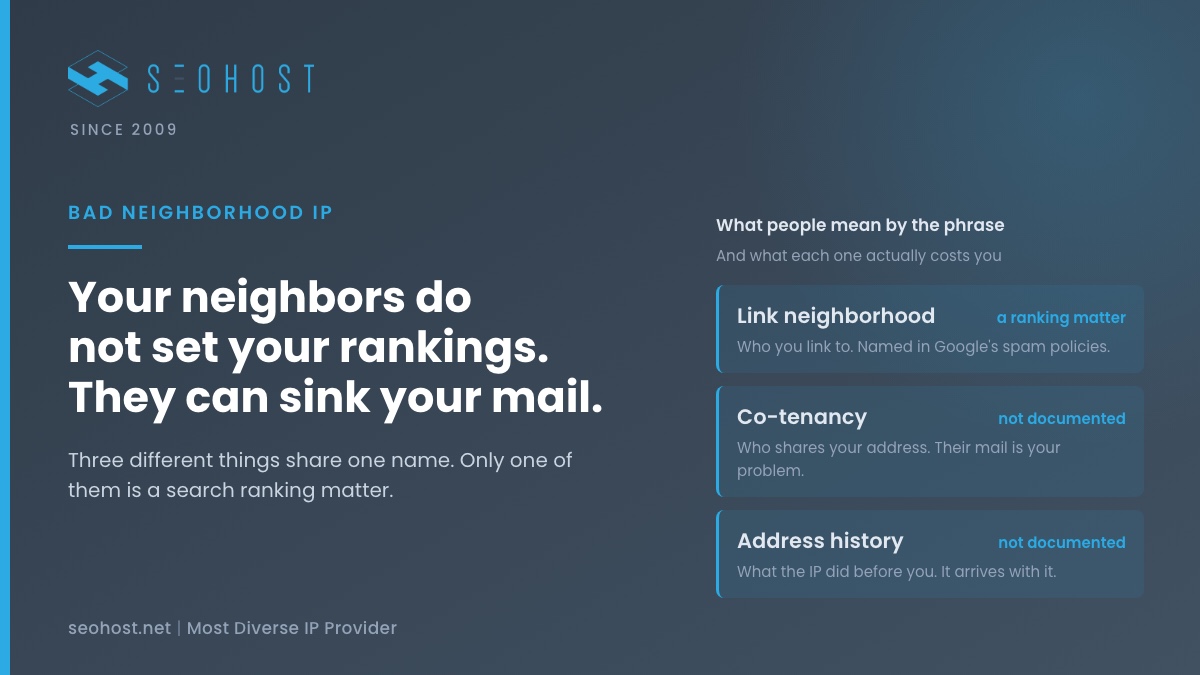
Bad Neighborhood IPs: What Sharing an IP With Spam Sites Actually Costs You
TL;DRA bad neighborhood IP is mostly not a ranking problem: Google’s spam policies describe links and behavior, not addresses. What an address’s history really costs you is rejected mail, challenged traffic and a cleanup you run yourself. We scanned the 512 addresses around our own site against two blocklists to show what a real neighborhood looks like, and how to check yours in five minutes.
Categories
- AI SEO
- Blogging
- International SEO
- Marketing
- News
- Search Engine Optimization
- SEO
- Web Hosting
- Webmaster
Social Links!
-
Why Are Google’s Algorithm Updates Always so Volatile?
It seems like every time Google releases a major algorithm update, the SEO space erupts into chaos. Countless websites lose their ranking in the search engine results pages, and multiple businesses end up facing a sharp decline in revenue. Why does this keep happening? Much of the consternation around Google’s algorithms is born of sensationalization.…
-

Crucial Last-Minute SEO Practices for Boxing Week
Boxing week is just about here. You’ve sprinkled your store with decorations, you’ve decided which products you want to put on sale, and you’ve done the necessary legwork to spread the word about your upcoming promotions via email, paid advertising, and social media. But is your website ready for the influx of traffic it’s likely…
-

How Does the Google Algorithm Index Content?
Although Google has provided us with the occasional breadcrumb over the years, we ultimately just don’t know how its algorithms really work. The majority of what we know about Google is based on observation. As reported by TechRadar Pro, this may soon change with the Digital Services Act, which goes into full force on Jan.…