SEO Hosting Blog
-
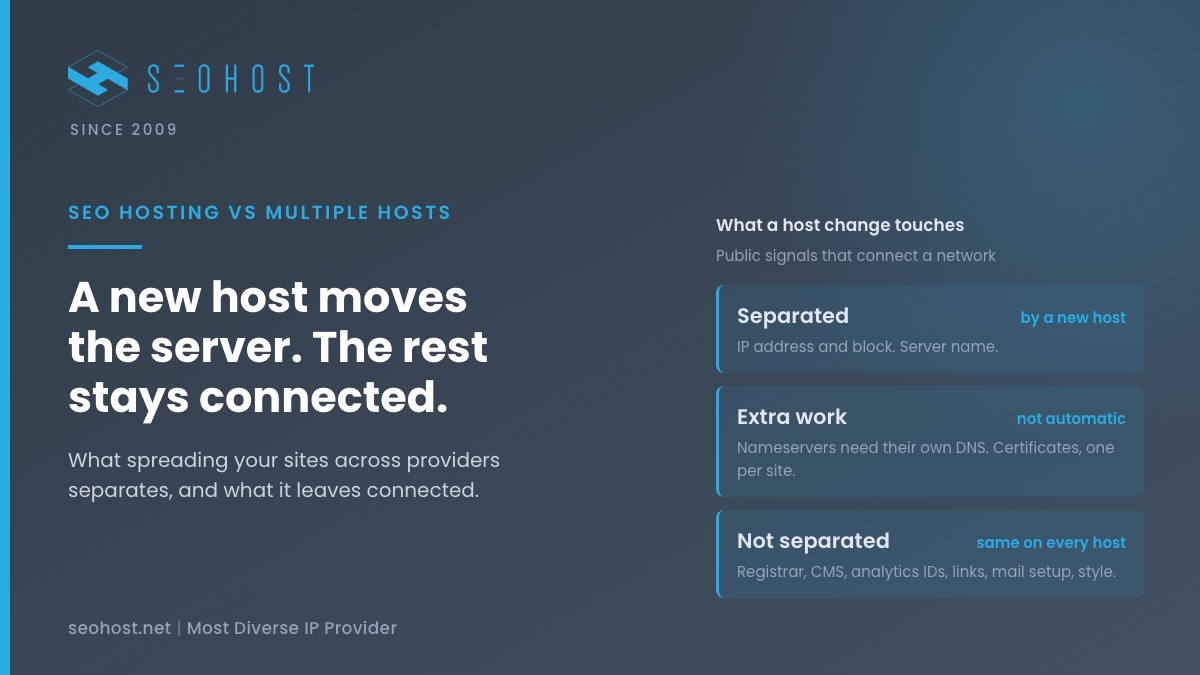
SEO Hosting vs Multiple Hosts: What Spreading Your Sites Really Costs
TL;DRSpreading a network across multiple hosts separates the IP address and the server, and Google has said neither one sets your rankings. Most of the other things that connect your sites, from the registrar record to the analytics ID, move with you to every host. What multiple hosts really adds is admin: a login, a renewal and a PHP schedule per site. For three sites that is a fair trade. Past that, we think one SEO host with separate addresses and nameservers per site is the better one, and the calculator below lets you test that against your own numbers.
-
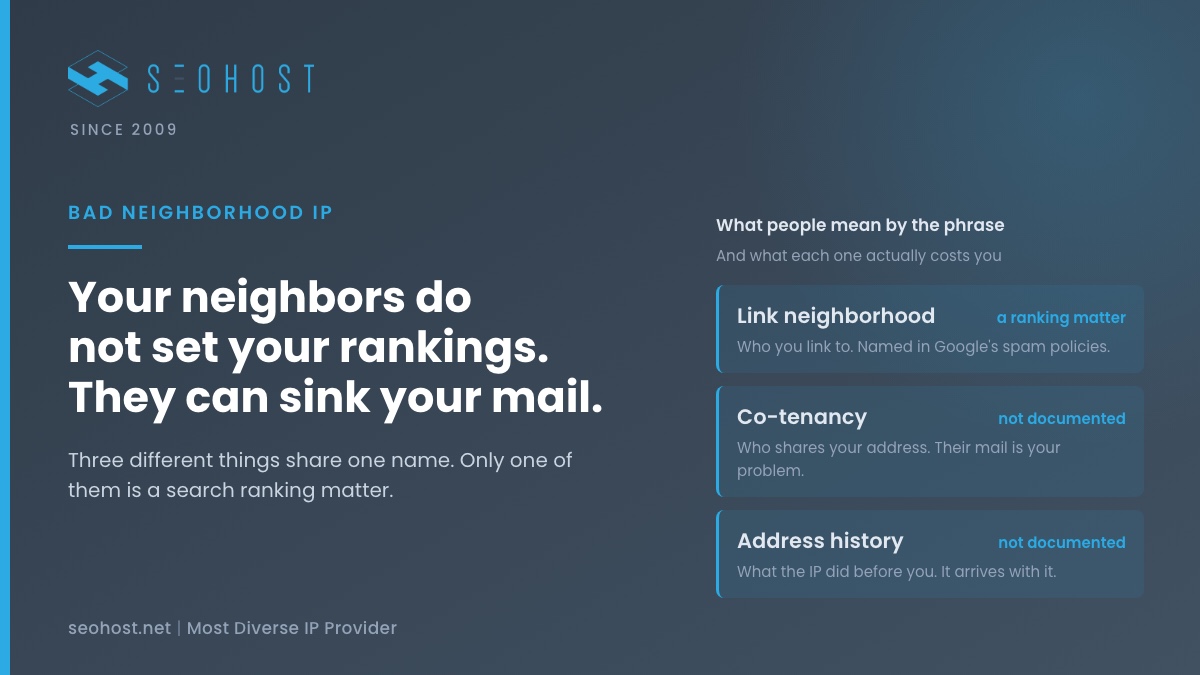
Bad Neighborhood IPs: What Sharing an IP With Spam Sites Actually Costs You
TL;DRA bad neighborhood IP is mostly not a ranking problem: Google’s spam policies describe links and behavior, not addresses. What an address’s history really costs you is rejected mail, challenged traffic and a cleanup you run yourself. We scanned the 512 addresses around our own site against two blocklists to show what a real neighborhood looks like, and how to check yours in five minutes.
Categories
- AI SEO
- Blogging
- International SEO
- Marketing
- News
- Search Engine Optimization
- SEO
- Web Hosting
- Webmaster
Social Links!
-

Three Reasons Why You Need Web Hosting
You’ve taken the first step to getting your business online. You’ve chosen and registered a great domain name. That’s awesome – now all you need to do is find a web host.
-

Web Hosting For Students – Is It Worth It?
LinkedIn. Facebook. Twitter. Instagram. There’s no shortage of opportunities for students and fresh graduates alike to establish their personal brand online.
-

Google Webmaster Tools – What They Are, And How To Use Them
It’s really no secret that Google’s search engine is a little arcane. Outside of a few tidbits of information the company has offered us, what little knowledge we have about Google’s algorithms is gleaned from guesswork. That’s precisely what makes something like Google Webmaster Tools – now known as the Google Search Console – so…