SEO Hosting Blog
-
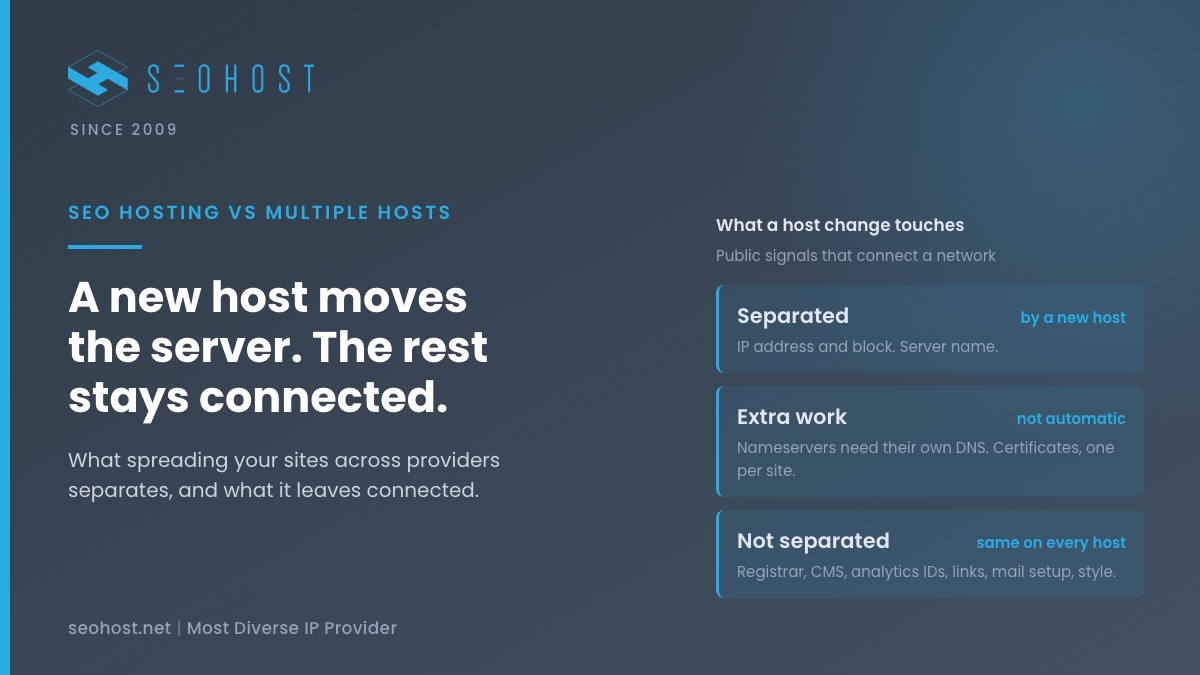
SEO Hosting vs Multiple Hosts: What Spreading Your Sites Really Costs
TL;DRSpreading a network across multiple hosts separates the IP address and the server, and Google has said neither one sets your rankings. Most of the other things that connect your sites, from the registrar record to the analytics ID, move with you to every host. What multiple hosts really adds is admin: a login, a renewal and a PHP schedule per site. For three sites that is a fair trade. Past that, we think one SEO host with separate addresses and nameservers per site is the better one, and the calculator below lets you test that against your own numbers.
-
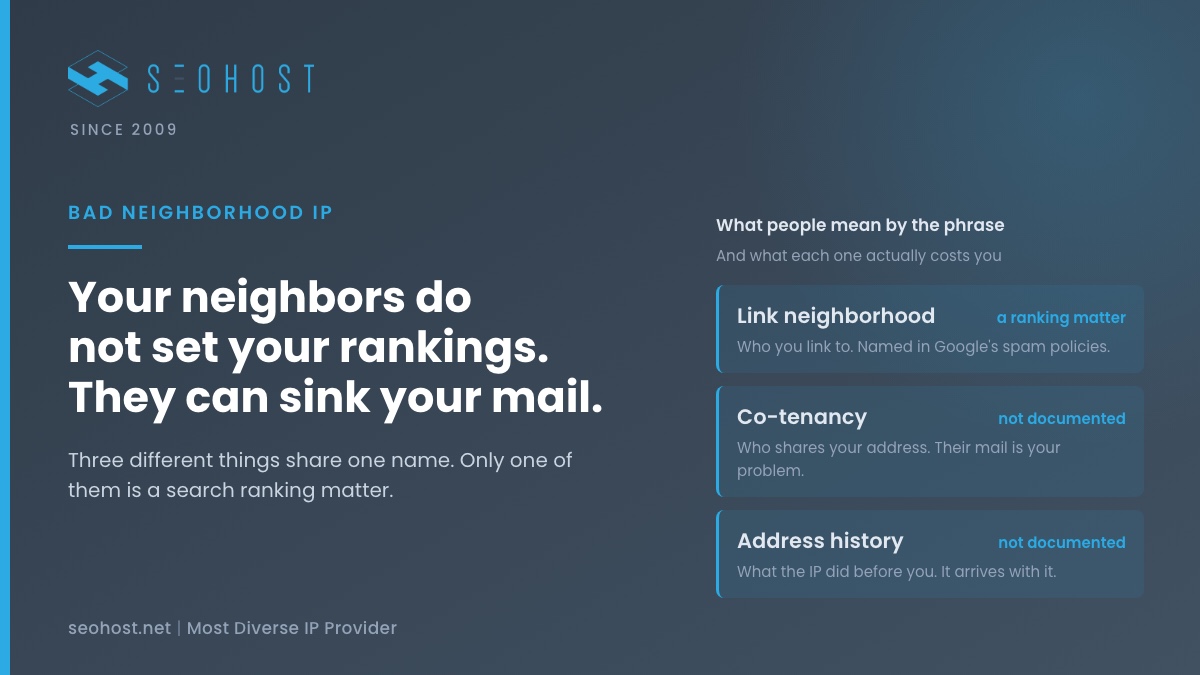
Bad Neighborhood IPs: What Sharing an IP With Spam Sites Actually Costs You
TL;DRA bad neighborhood IP is mostly not a ranking problem: Google’s spam policies describe links and behavior, not addresses. What an address’s history really costs you is rejected mail, challenged traffic and a cleanup you run yourself. We scanned the 512 addresses around our own site against two blocklists to show what a real neighborhood looks like, and how to check yours in five minutes.
Categories
- AI SEO
- Blogging
- International SEO
- Marketing
- News
- Search Engine Optimization
- SEO
- Web Hosting
- Webmaster
Social Links!
-

What to Do With Google My Business During COVID-19
As you might expect, the coronavirus has had a significant impact on local businesses. Many have had to either close their doors completely or work on severely-reduced hours. To its credit, Google has been relatively quick to respond with several updates to Google My Business. Here’s what you need to know.
-

3 Characteristics of Manipulative Marketing (And Why You Need to Avoid Doing It)
Some unscrupulous brands are playing off COVID-19 anxiety to drum up sales. Yours should not be among them. You need to avoid exploitative marketing. Not just for the well-being of your audience, but for the long-term health of your brand. Here’s how to recognize and avoid it.
-

How Should Your Brand Address COVID-19?
By now, most of us have been flooded with content related to the coronavirus. Emails that explain, in great depth, how every brand we’ve ever worked with is approaching the pandemic. News stories about the virus’s progression, and about the multiple flubs and fumbles being committed by businesses both great and small. Social feeds flooded…