SEO Hosting Blog
-
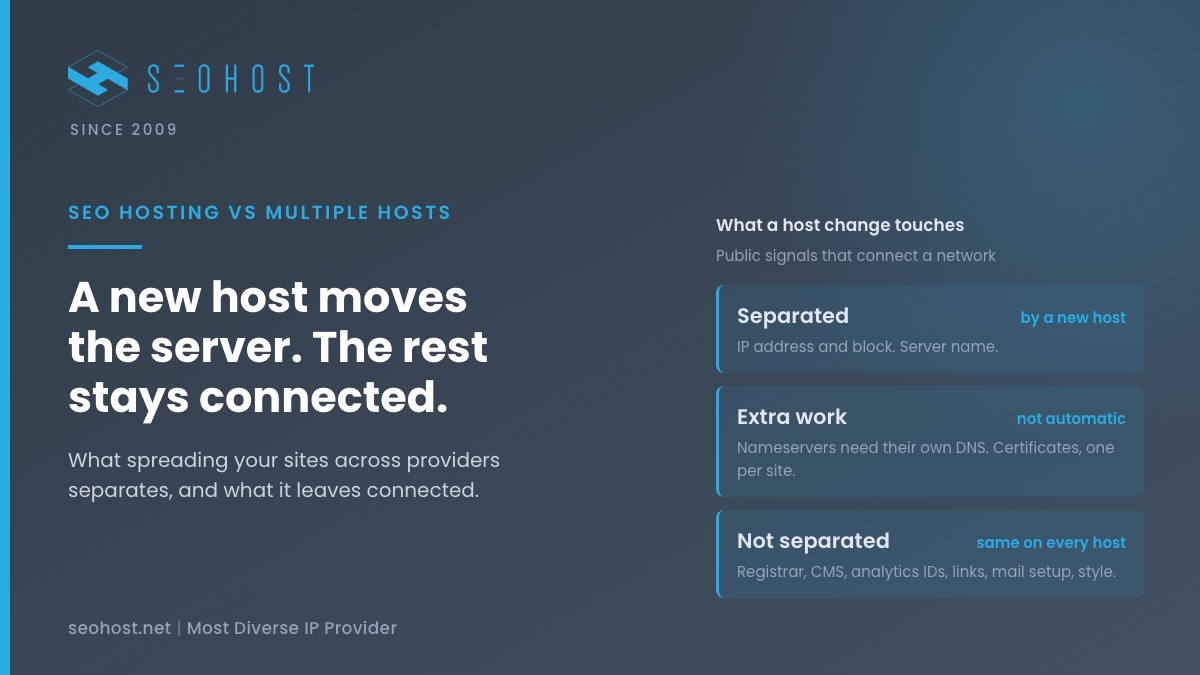
SEO Hosting vs Multiple Hosts: What Spreading Your Sites Really Costs
TL;DRSpreading a network across multiple hosts separates the IP address and the server, and Google has said neither one sets your rankings. Most of the other things that connect your sites, from the registrar record to the analytics ID, move with you to every host. What multiple hosts really adds is admin: a login, a renewal and a PHP schedule per site. For three sites that is a fair trade. Past that, we think one SEO host with separate addresses and nameservers per site is the better one, and the calculator below lets you test that against your own numbers.
-
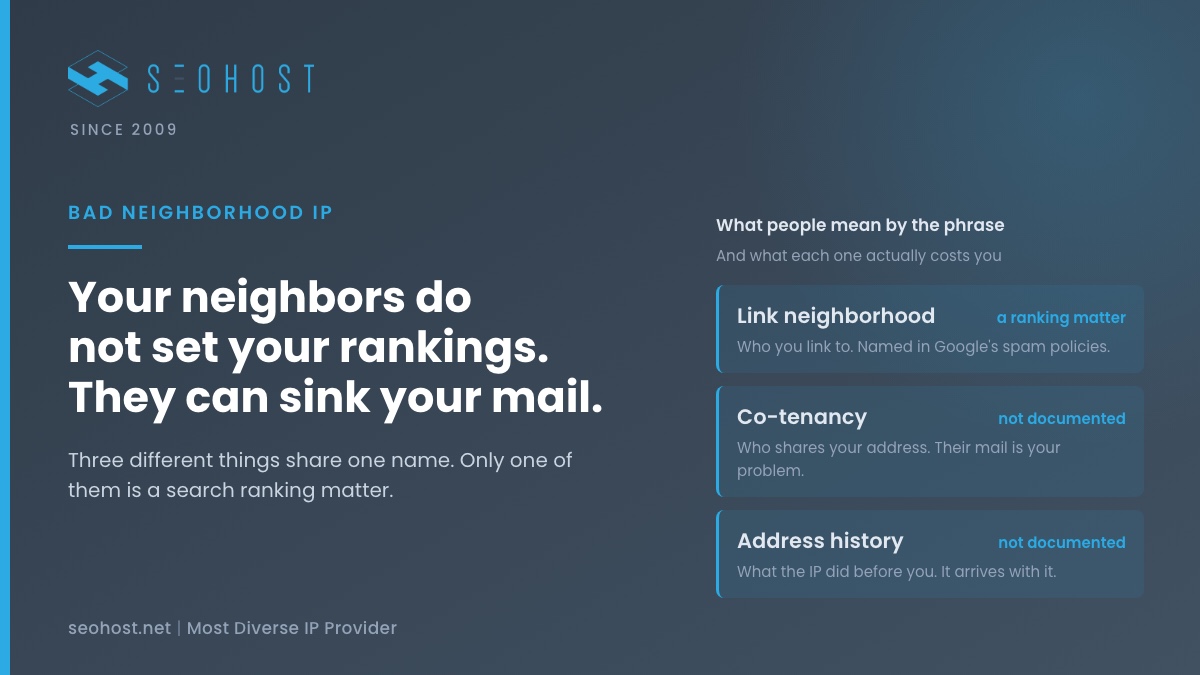
Bad Neighborhood IPs: What Sharing an IP With Spam Sites Actually Costs You
TL;DRA bad neighborhood IP is mostly not a ranking problem: Google’s spam policies describe links and behavior, not addresses. What an address’s history really costs you is rejected mail, challenged traffic and a cleanup you run yourself. We scanned the 512 addresses around our own site against two blocklists to show what a real neighborhood looks like, and how to check yours in five minutes.
Categories
- AI SEO
- Blogging
- International SEO
- Marketing
- News
- Search Engine Optimization
- SEO
- Web Hosting
- Webmaster
Social Links!
-

The Webmaster Removal Tool: How You Can Remove A URL On Your Website From Google
There are many reasons you might want Google to stop indexing a page on your site. Maybe the content is outdated and no longer relevant. Maybe you need to remove the content for legal reasons. Or maybe you simply no longer want to be online.
-

Why And When Should You Put Your Website In The Hands Of A Webmaster?
It’s not enough to simply build your website and unleash it on the Internet. Maintaining a decent web presence requires constant vigilance, hard work, and at least a little expertise. After all, there’s a lot going on underneath the surface.
-

The Three Key Components of a Successful Facebook Ad
What’s in an ad?