SEO Hosting Blog
-

SEO Hosting vs Multiple Hosts: What Spreading Your Sites Really Costs
TL;DRSpreading a network across multiple hosts separates the IP address and the server, and Google has said neither one sets your rankings. Most of the other things that connect your sites, from the registrar record to the analytics ID, move with you to every host. What multiple hosts really adds is admin: a login, a renewal and a PHP schedule per site. For three sites that is a fair trade. Past that, we think one SEO host with separate addresses and nameservers per site is the better one, and the calculator below lets you test that against your own numbers.
-
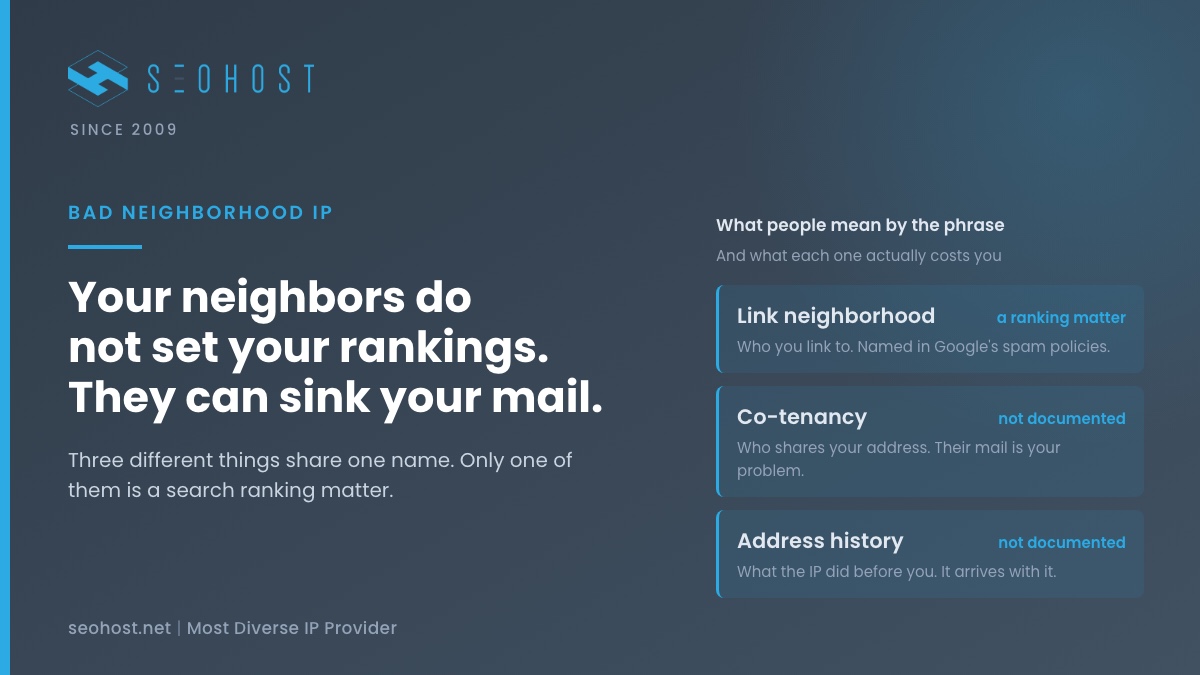
Bad Neighborhood IPs: What Sharing an IP With Spam Sites Actually Costs You
TL;DRA bad neighborhood IP is mostly not a ranking problem: Google’s spam policies describe links and behavior, not addresses. What an address’s history really costs you is rejected mail, challenged traffic and a cleanup you run yourself. We scanned the 512 addresses around our own site against two blocklists to show what a real neighborhood looks like, and how to check yours in five minutes.
Categories
- AI SEO
- Blogging
- International SEO
- Marketing
- News
- Search Engine Optimization
- SEO
- Web Hosting
- Webmaster
Social Links!
-

What Can You Do if Google Displays The Wrong Title on the SERP?
We’ve received a sobering reminder that no matter what we do, our search engine optimization efforts are ultimately at Google’s mercy. At least that’s the message the search engine giant sent in August. Midway through the month, SEO experts noticed some massive changes to how titles were generated on the search engine results page, as…
-

5 Excellent Tips To Help You Do SEO on a Budget
Search engine optimization needn’t break the bank. If you know what you’re doing, it can be done without spending a cent. Here are some tips to help you do so.
-

Exploring the Link Between Marketing and Psychology
What do marketing and psychology have to do with one another? A great deal more than you might expect. In many ways, they’re two sides of the same coin.