SEO Hosting Blog
-
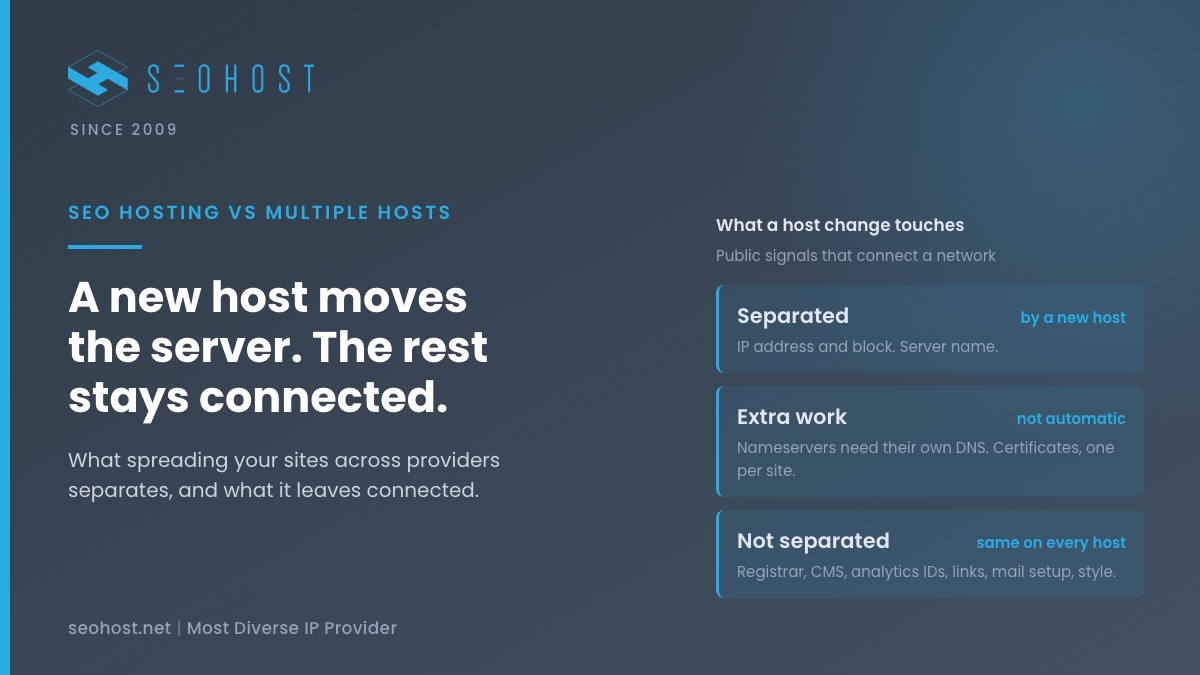
SEO Hosting vs Multiple Hosts: What Spreading Your Sites Really Costs
TL;DRSpreading a network across multiple hosts separates the IP address and the server, and Google has said neither one sets your rankings. Most of the other things that connect your sites, from the registrar record to the analytics ID, move with you to every host. What multiple hosts really adds is admin: a login, a renewal and a PHP schedule per site. For three sites that is a fair trade. Past that, we think one SEO host with separate addresses and nameservers per site is the better one, and the calculator below lets you test that against your own numbers.
-
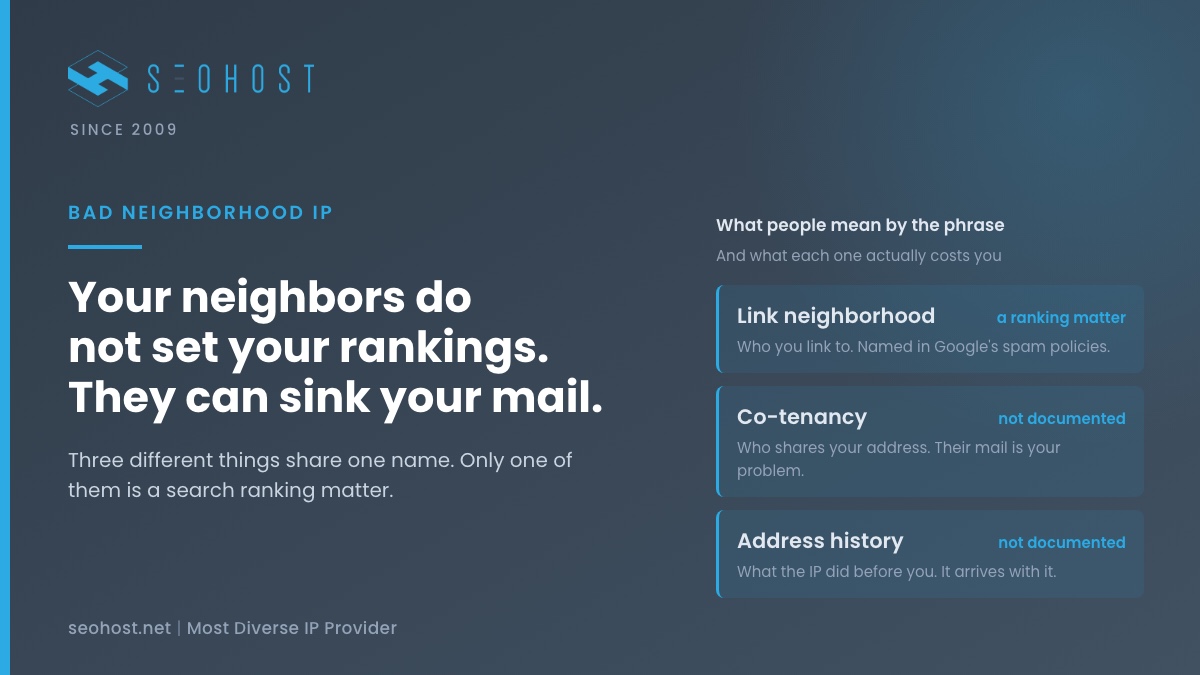
Bad Neighborhood IPs: What Sharing an IP With Spam Sites Actually Costs You
TL;DRA bad neighborhood IP is mostly not a ranking problem: Google’s spam policies describe links and behavior, not addresses. What an address’s history really costs you is rejected mail, challenged traffic and a cleanup you run yourself. We scanned the 512 addresses around our own site against two blocklists to show what a real neighborhood looks like, and how to check yours in five minutes.
Categories
- AI SEO
- Blogging
- International SEO
- Marketing
- News
- Search Engine Optimization
- SEO
- Web Hosting
- Webmaster
Social Links!
-

Three Ways To Automate SEO
Content is king, but search engine optimization is still incredibly important. Even if what you create is of the utmost quality, even if what you publish is incredibly engaging, that doesn’t matter if you can’t get eyes on it. But what if you don’t have the time to spend exploring the intricacies of on-page and…
-

How to Use Google Shopping Ads to Promote Your Storefront
Per research by digital marketing expert Adthena, Google Shopping ads generate 76 percent of retail search ad spend and generate 85 percent of all clicks on Adwords. Search engine marketing blog Search Engine Land rightly called it the largest growth opportunity of the year for online retailers. What we’re saying here is that if you’re…
-

How to Perform an SEO Audit On Your Website
One thing we consistently see people neglect where search engine optimization is concerned is auditing. It’s also one of the most critical stages in the process, though. A thorough understanding not only of what you’re doing right but where you’re going wrong is absolutely essential if you’re to succeed in creating a well-optimized, well-performing website.