SEO Hosting Blog
-
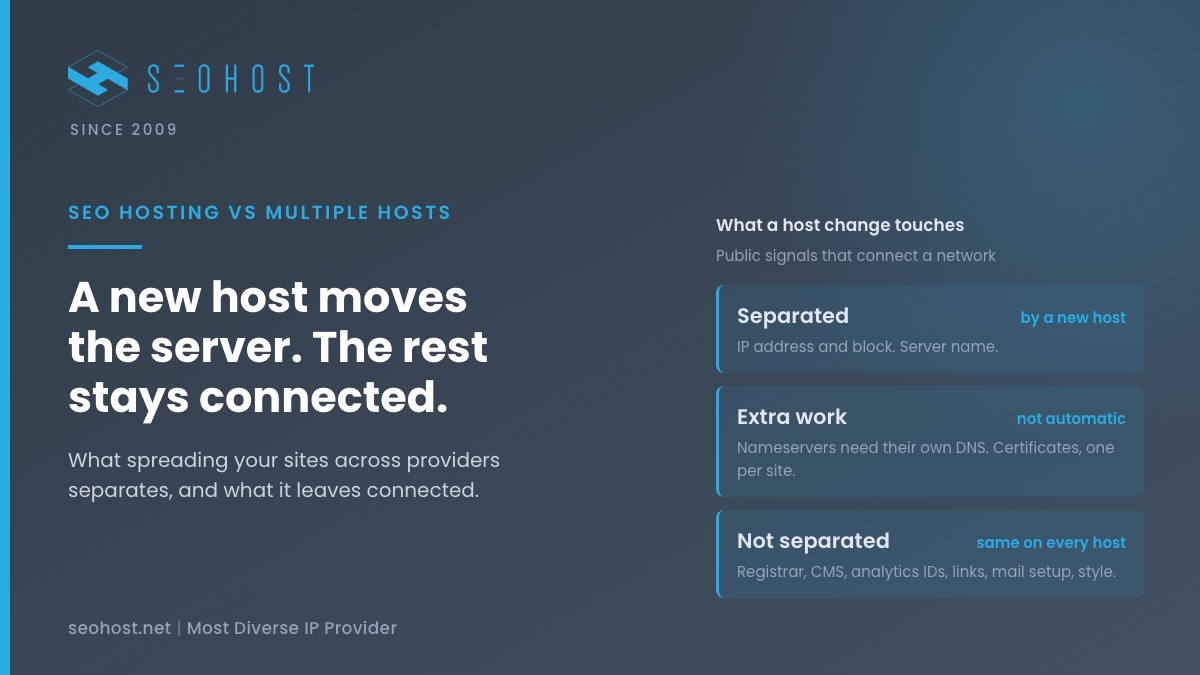
SEO Hosting vs Multiple Hosts: What Spreading Your Sites Really Costs
TL;DRSpreading a network across multiple hosts separates the IP address and the server, and Google has said neither one sets your rankings. Most of the other things that connect your sites, from the registrar record to the analytics ID, move with you to every host. What multiple hosts really adds is admin: a login, a renewal and a PHP schedule per site. For three sites that is a fair trade. Past that, we think one SEO host with separate addresses and nameservers per site is the better one, and the calculator below lets you test that against your own numbers.
-
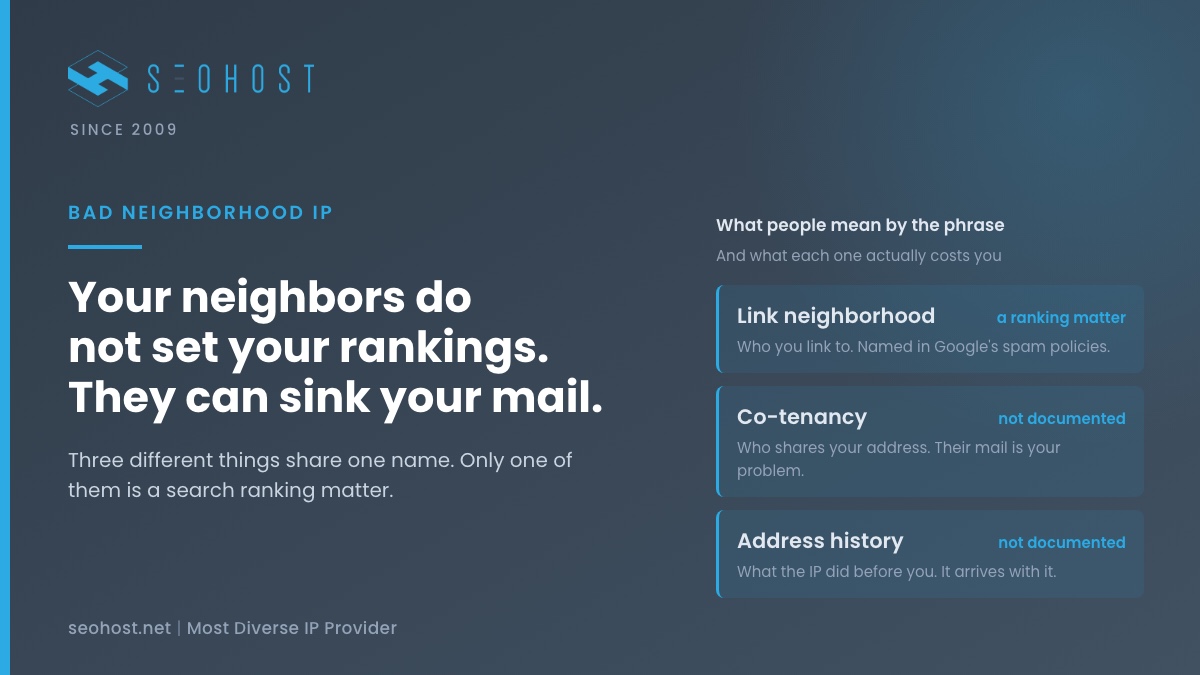
Bad Neighborhood IPs: What Sharing an IP With Spam Sites Actually Costs You
TL;DRA bad neighborhood IP is mostly not a ranking problem: Google’s spam policies describe links and behavior, not addresses. What an address’s history really costs you is rejected mail, challenged traffic and a cleanup you run yourself. We scanned the 512 addresses around our own site against two blocklists to show what a real neighborhood looks like, and how to check yours in five minutes.
Categories
- AI SEO
- Blogging
- International SEO
- Marketing
- News
- Search Engine Optimization
- SEO
- Web Hosting
- Webmaster
Social Links!
-

What Are the Four Pillars of SEO, and Why Are They Important?
To hear some people talk, search engine optimization (SEO) is some sort of arcane, incomprehensible craft. Those are the snake oil salespeople of the SEO sector—we’ve warned you about them in the past. The truth is that SEO isn’t actually as complicated as you might think. Though with that said, it can be overwhelming, particularly…
-

What Role Does Page Speed Play in Search Engine Optimization?
Faster is better. That’s been common knowledge for a while now. Unless there’s a noticeable gap in quality, a faster website will almost always outperform slower sites in the same niche. We aren’t solely talking about search engine optimization (SEO), either. More than half of mobile users abandon a website if it takes longer than…
-

How to Successfully Target Keywords in your Blog Posts in 2022
Content is king. SEO is dead. Relevance, relevance, relevance. You’ve heard it all before, the buzzwords, sweeping assertions, and half-truths. We’d wager you’re just as tired of it as we are. See, although content is important, it’s only part of the equation. You still need a strategy—something to inform what you write and to whom…