SEO Hosting Blog
-
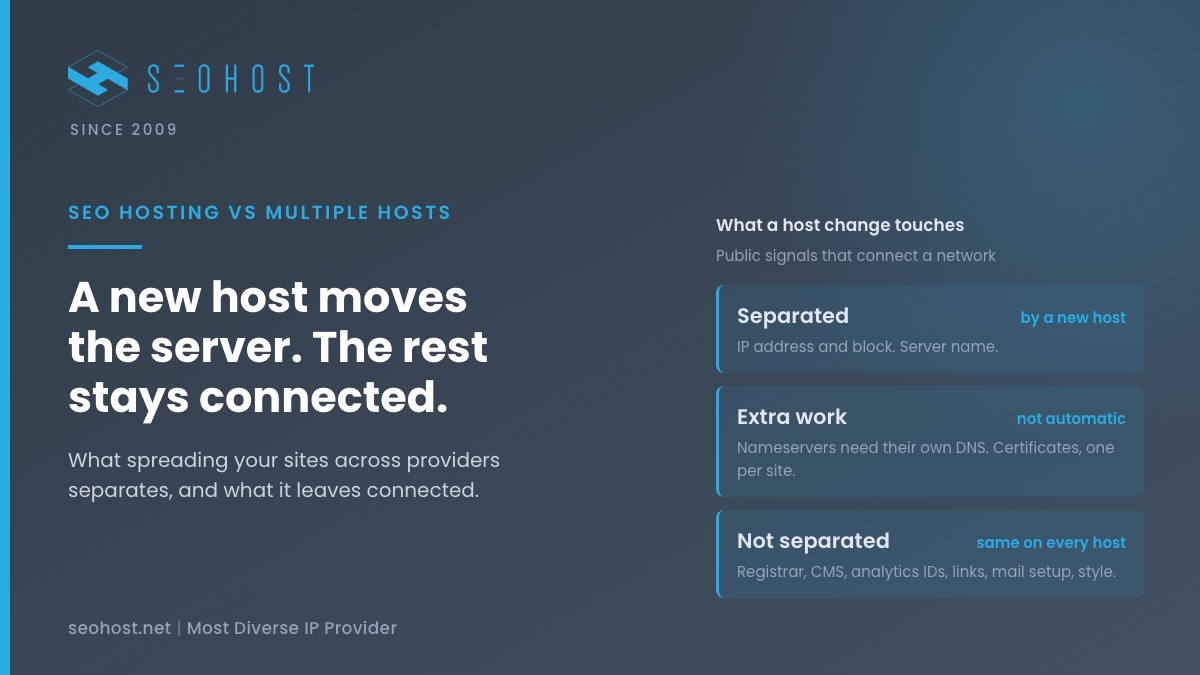
SEO Hosting vs Multiple Hosts: What Spreading Your Sites Really Costs
TL;DRSpreading a network across multiple hosts separates the IP address and the server, and Google has said neither one sets your rankings. Most of the other things that connect your sites, from the registrar record to the analytics ID, move with you to every host. What multiple hosts really adds is admin: a login, a renewal and a PHP schedule per site. For three sites that is a fair trade. Past that, we think one SEO host with separate addresses and nameservers per site is the better one, and the calculator below lets you test that against your own numbers.
-
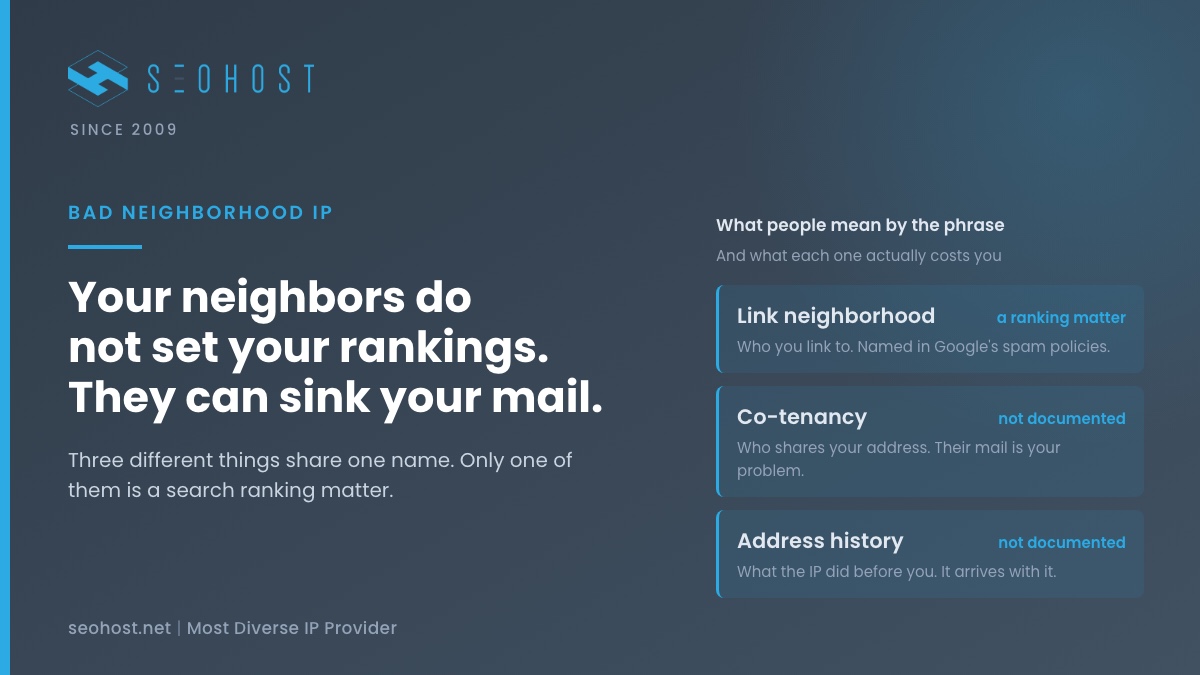
Bad Neighborhood IPs: What Sharing an IP With Spam Sites Actually Costs You
TL;DRA bad neighborhood IP is mostly not a ranking problem: Google’s spam policies describe links and behavior, not addresses. What an address’s history really costs you is rejected mail, challenged traffic and a cleanup you run yourself. We scanned the 512 addresses around our own site against two blocklists to show what a real neighborhood looks like, and how to check yours in five minutes.
Categories
- AI SEO
- Blogging
- International SEO
- Marketing
- News
- Search Engine Optimization
- SEO
- Web Hosting
- Webmaster
Social Links!
-

How COVID-19 Has Changed Influencer Marketing
According to a survey released in April by market research SaaS firm Global Web Index, 87 percent of U.S. consumers increased their overall media consumption as a direct result of COVID-19 This doesn’t come as much of a surprise. Over the course of the pandemic, people all over the world have had to cope with…
-

The Critical Role of Experiential Marketing on Social Media
Social media isn’t exactly untrodden ground. It’s been 16 years since Facebook was founded. Twitter has existed for 14 years. There is an entire generation of people who have never experienced life without social networks. With this in mind, it’s somewhat baffling that there are still so many businesses that don’t understand social marketing. Some…
-

How User Feedback Can Inform Your SEO Strategy
The most successful businesses are those that listen to their customers. This has been true since well before the Internet even existed. And it remains true to this day. That’s one of the core reasons why online reviews are so incredibly valuable where search engine optimization(SEO) is concerned. Not only do they have a direct…