SEO Hosting Blog
-
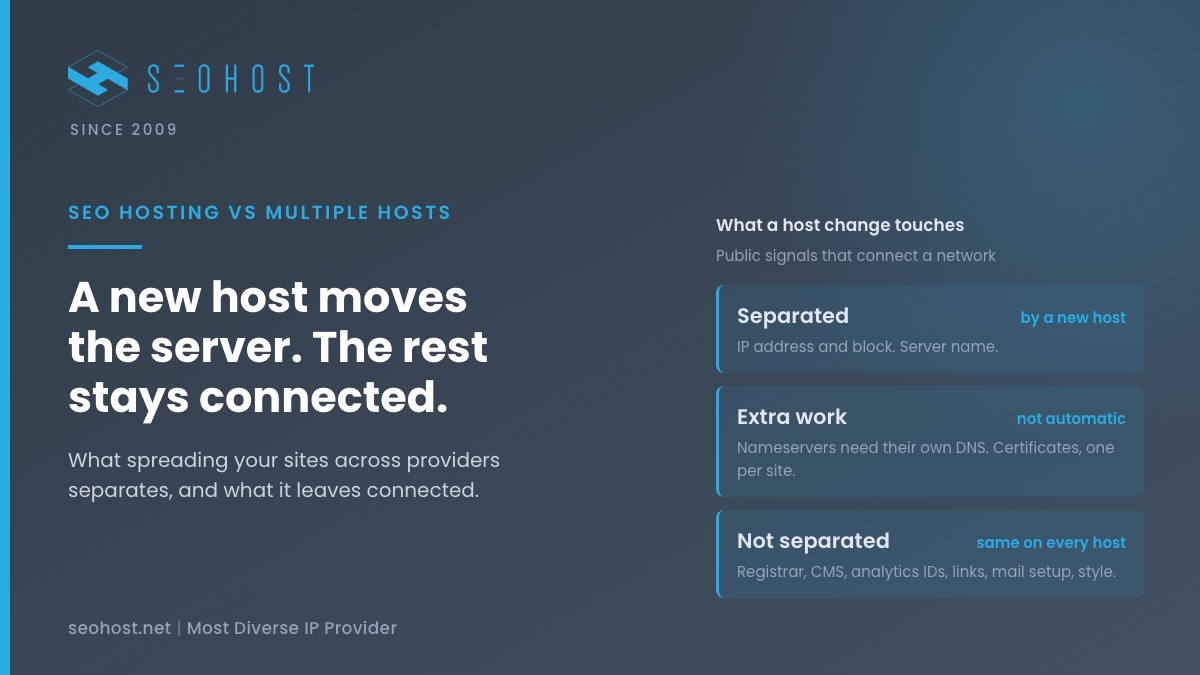
SEO Hosting vs Multiple Hosts: What Spreading Your Sites Really Costs
TL;DRSpreading a network across multiple hosts separates the IP address and the server, and Google has said neither one sets your rankings. Most of the other things that connect your sites, from the registrar record to the analytics ID, move with you to every host. What multiple hosts really adds is admin: a login, a renewal and a PHP schedule per site. For three sites that is a fair trade. Past that, we think one SEO host with separate addresses and nameservers per site is the better one, and the calculator below lets you test that against your own numbers.
-
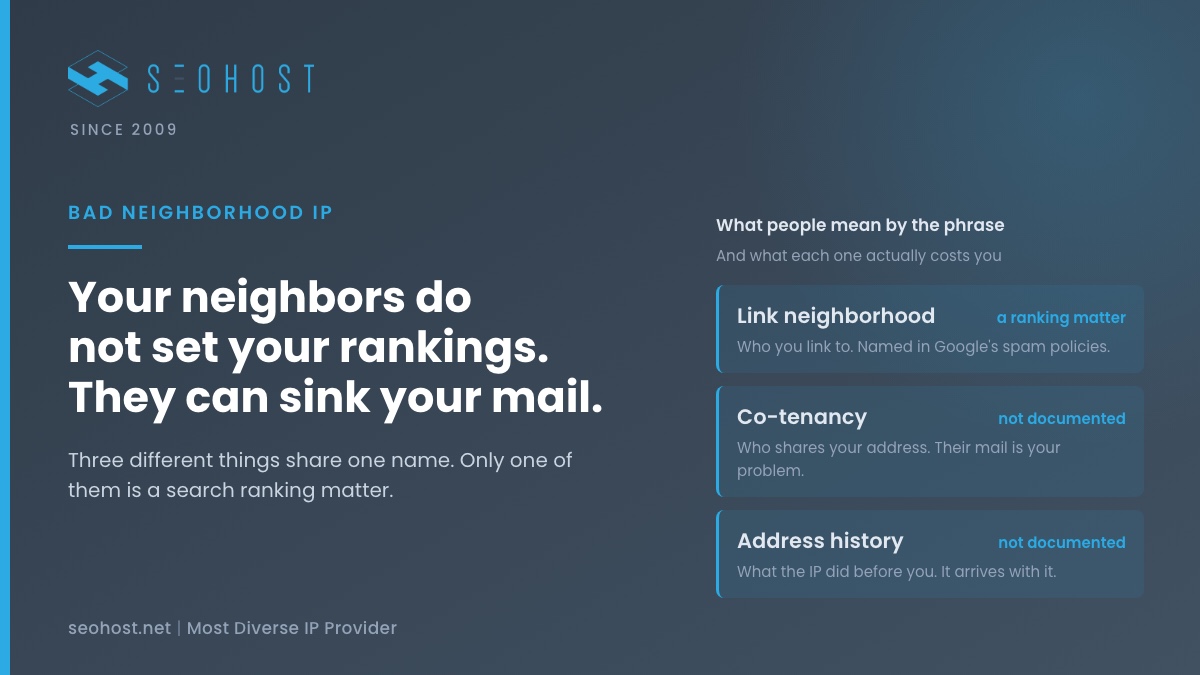
Bad Neighborhood IPs: What Sharing an IP With Spam Sites Actually Costs You
TL;DRA bad neighborhood IP is mostly not a ranking problem: Google’s spam policies describe links and behavior, not addresses. What an address’s history really costs you is rejected mail, challenged traffic and a cleanup you run yourself. We scanned the 512 addresses around our own site against two blocklists to show what a real neighborhood looks like, and how to check yours in five minutes.
Categories
- AI SEO
- Blogging
- International SEO
- Marketing
- News
- Search Engine Optimization
- SEO
- Web Hosting
- Webmaster
Social Links!
-

What Role do Backlinks Play in Search Engine Optimization in 2022?
Remember back in the earliest days of search engine optimization? Back when the Internet was akin to the Wild West, and tactics like keyword stuffing and link farms were still relevant? We’ve come a long way since then, haven’t we? Especially lately. It seems like every single one of Google’s more recent algorithm updates have…
-

What is Virtual Environment Optimization (VEO)?
People are obsessed over how virtual reality and augmented reality will disrupt the marketing sector. Unsurprisingly, with hype comes buzzwords. And the latest phrase that seems to be on everyone’s lips? Virtual Environment Optimization (VEO). It’s pretty much exactly what it sounds like. Just as Search Engine Optimization (SEO) involves tweaking your website’s performance and…
-
Is it Possible to Predict the Outcome of an Algorithm Update?
Google’s algorithm remains one of the most enduring mysteries in search engine optimization. Although we know the general rules, no one is entirely clear about how they’re enforced. Similarly, there’s rarely a clear consensus on the nature of upcoming releases—every expert tends to have their own take on what’s coming. Given how arcane Google’s algorithm…