SEO Hosting Blog
-
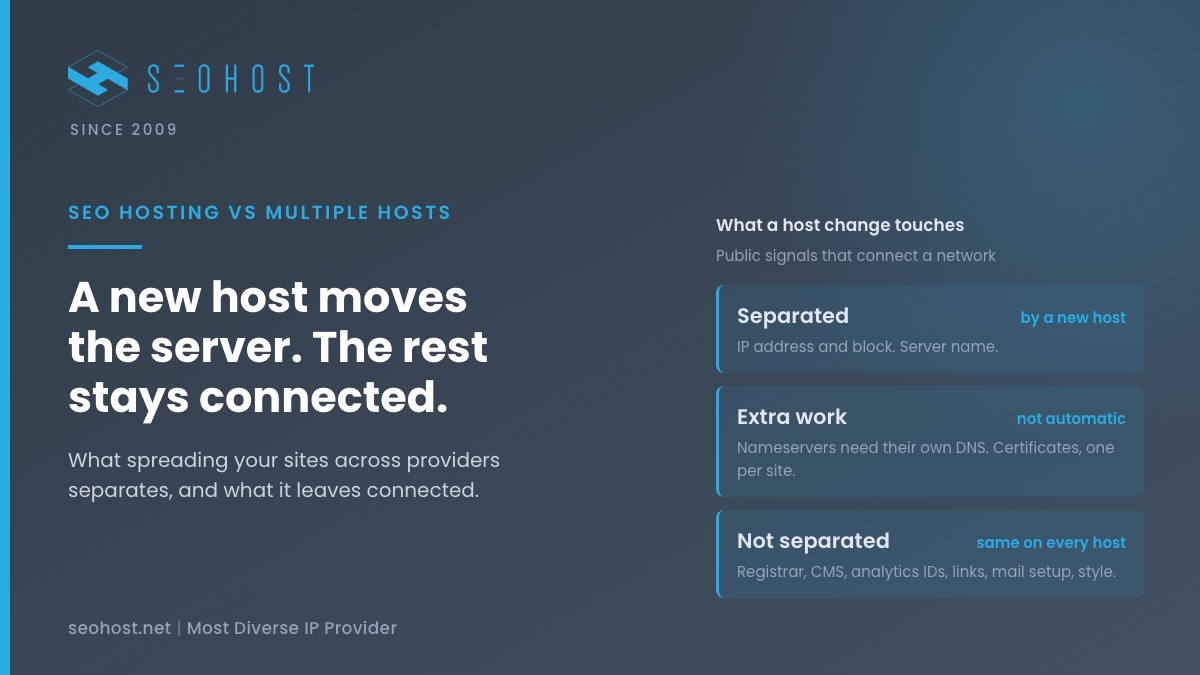
SEO Hosting vs Multiple Hosts: What Spreading Your Sites Really Costs
TL;DRSpreading a network across multiple hosts separates the IP address and the server, and Google has said neither one sets your rankings. Most of the other things that connect your sites, from the registrar record to the analytics ID, move with you to every host. What multiple hosts really adds is admin: a login, a renewal and a PHP schedule per site. For three sites that is a fair trade. Past that, we think one SEO host with separate addresses and nameservers per site is the better one, and the calculator below lets you test that against your own numbers.
-
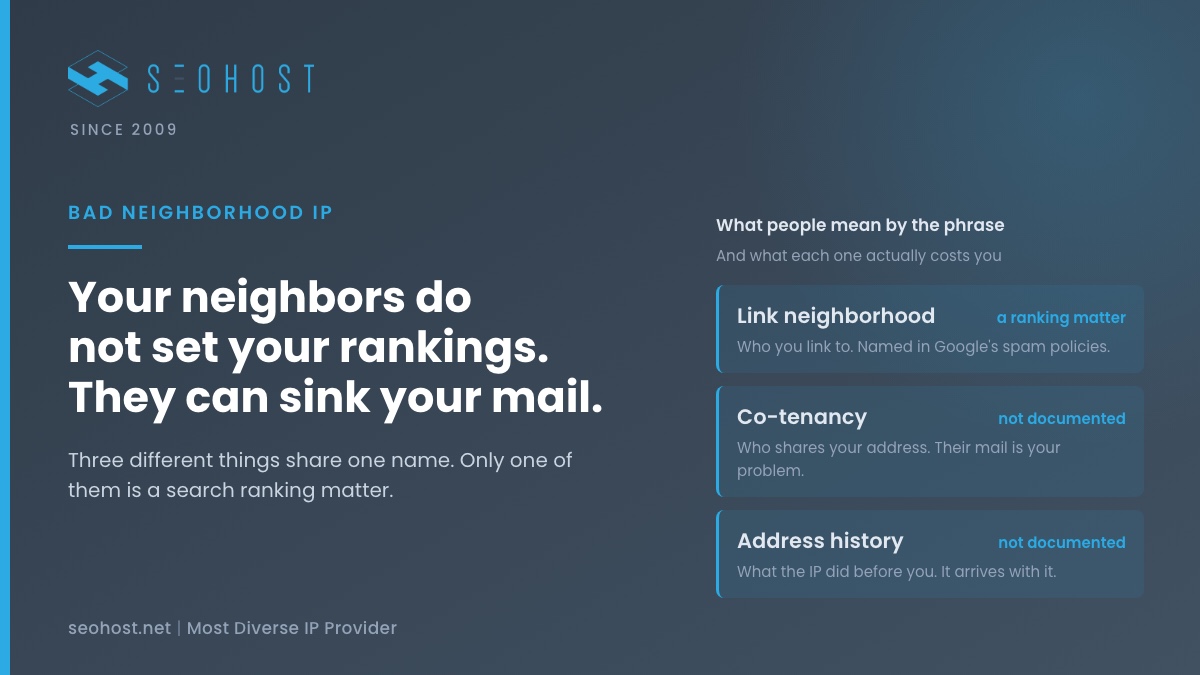
Bad Neighborhood IPs: What Sharing an IP With Spam Sites Actually Costs You
TL;DRA bad neighborhood IP is mostly not a ranking problem: Google’s spam policies describe links and behavior, not addresses. What an address’s history really costs you is rejected mail, challenged traffic and a cleanup you run yourself. We scanned the 512 addresses around our own site against two blocklists to show what a real neighborhood looks like, and how to check yours in five minutes.
Categories
- AI SEO
- Blogging
- International SEO
- Marketing
- News
- Search Engine Optimization
- SEO
- Web Hosting
- Webmaster
Social Links!
-

What Facebook Burnout Means for Social Marketing
People are fed up with Facebook, and it isn’t hard to see why. It’s gone from a great platform that everyone loves to use to a place everyone loves to hate. The reasons are many and varied, but ultimately come down to the social network’s blatant disregard for the well-being of its users. Pushy marketing…
-

Optimizing Your Google My Business Page
Local search engine optimization, at its core, is about connecting your business with nearby sales prospects. To that end, Google My Business represents one of the most powerful tools in your repertoire. A free tool provided by Google, Google My Business allows you to create a digital profile for your organization that includes location, photos,…
-

5 Best Practices for Website Push Notifications
Recently, you may have noticed more and more websites requesting your permission to enable push notifications. Used effectively, they can be an incredibly valuable tool for increasing audience engagement, particularly amongst desktop users. Unfortunately, in our experience, most businesses don’t know how to use them effectively. As a result, they end up annoying their audience…